
Quick answer: Use the pressure range printed on your tire sidewall, which is given as a minimum and maximum PSI, and stay inside it. Start near the middle, go a little higher if you are heavier or riding smooth pavement, and a little lower for comfort or loose surfaces. Check with a gauge before rides, since tires lose air over time.
Right tire pressure makes a bike roll easier, feel more comfortable and resist flats. This guide shows where to find your range, how to check it and what changes the number. Tools to help: floor pumps and tire pressure gauges.
Where to Find Your PSI Range
Most tires have a recommended range molded into the sidewall, often shown in PSI and sometimes in bar. Rims can also carry a limit. If the two differ, stay under the lower one. This range is the starting point, not a single exact number.
What Changes the Right Pressure
- Rider weight: heavier riders usually go toward the upper half of the range.
- Tire width: wider tires generally run lower pressure than narrow ones.
- Surface: a little less pressure gives more grip and comfort on rough or loose ground, and more suits smooth pavement.
- Bike type: road, mountain and fat tire bikes use very different ranges, so check your own tire.
Tires by type: road, mountain, gravel and hybrid.
How to Check and Inflate
- Read the range on the sidewall.
- Unscrew the valve cap and attach the pump head to the valve.
- Pump while watching the gauge, then stop inside the range.
- Detach quickly, close the valve if it has a lock nut and replace the cap.
Check before rides, because tires lose some air even when nothing is wrong. Compare bike pumps, mini pumps and CO2 inflators.
Signs the Pressure Is Off
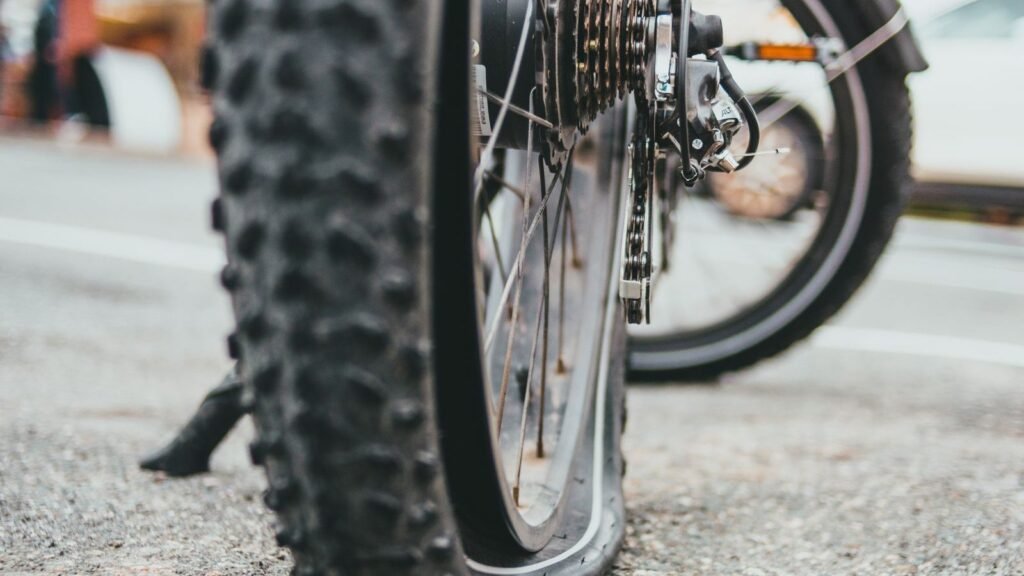
A tire that looks squashed, feels sluggish or bottoms out on the rim is likely too soft, and soft tires are more prone to pinch flats. A tire that feels harsh and skips over bumps may be too firm. If a tire keeps going soft, see how to fix a flat bike tire and stock patch kits, tubes and tire levers.
Make It Part of Your Routine
Add a tire check to your bike pre-ride safety check. For fat tires, see fat tire bikes, and for tires that are hard to inflate, see electric bike pumps. New rider? Start with how to start cycling for beginners.
FAQ
How do I know what PSI my bike tires need?
Read the minimum and maximum range printed on the tire sidewall and stay inside it.
How often should I check bike tire pressure?
Check before rides, since tires slowly lose air even without a puncture.
Should heavier riders use higher pressure?
Usually yes, toward the upper half of the printed range, within the limit.
Is lower pressure better off-road?
A little lower often gives more grip and comfort on loose or rough ground, but not below the minimum.
Do I need a gauge?
A pump with a built-in gauge works, and a separate gauge is handy for checking accuracy.