
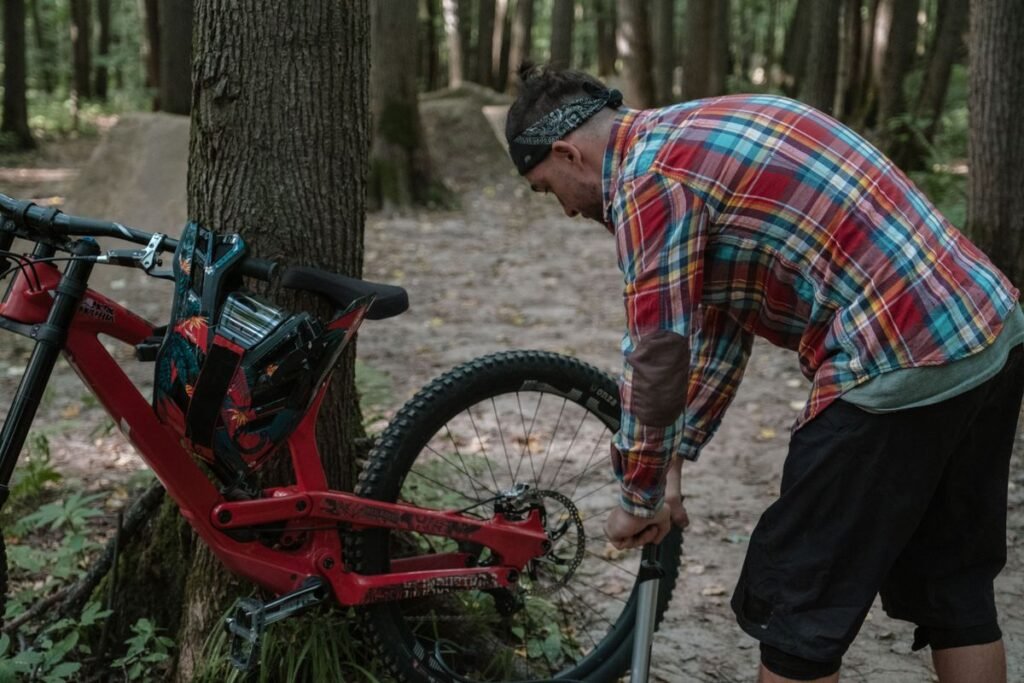
Quick answer: Our top pick in this guide to the best bike floor pumps (2026) is the Topeak JoeBlow Max HP at $50 (overall). The runner-up is the Lezyne Steel Floor Drive at $65. The table below compares all picks by price and who each is best for.
The best bike floor pumps make weekly tire top-ups a thirty-second job: a stable base, an accurate gauge and a chuck that seals on the first try. A good one lasts a decade, so it is worth buying once and buying right. We compared the proven shop-quality options from value picks to tubeless chargers to find the pumps worth parking next to your bike.
Disclosure: This article contains links to products on Amazon. If you buy through these links, we may earn a small commission at no extra cost to you.
Related guide: bike pre-ride safety check.
Related guide: bike tire pressure guide.
Quick picks
| Floor pump | Best for | Max pressure | Price (approx.) |
|---|---|---|---|
| Topeak JoeBlow Max HP | Overall | 160 psi | $50 |
| Lezyne Steel Floor Drive | Durability | 220 psi | $65 |
| Specialized Air Tool Comp V2 | Accuracy | 120 psi | $45 |
| Bontrager Charger | Simplicity | 160 psi | $40 |
| Topeak JoeBlow Sport II | Value | 160 psi | $45 |
| Bontrager TLR Flash Charger | Tubeless | Charge tank | $120 |
1. Topeak JoeBlow Max HP — best overall
The JoeBlow Max HP is the benchmark home pump: a wide steel base that never wobbles, a large easy-read gauge and Topeak’s TwinHead chuck that flips between Presta and Schrader with no adapters. It moves air fast, seats high-pressure road tires without drama, and every wear part is replaceable.
Check price on Amazon (about $50)
- Pros: rock-solid base; fast inflation to 160 psi; tool-free valve switching; long hose reaches bikes on stands.
- Cons: gauge reads in 10 psi steps, less precise for fat tires; bulky to store.
Specs: steel base and barrel; TwinHead chuck; 160 psi max; top-mounted gauge.
2. Lezyne Steel Floor Drive — best durability
The Steel Floor Drive is the buy-it-for-life option: a full steel and aluminum build, Lezyne’s threaded ABS chuck that screws onto the valve for a perfect seal, and a gauge accurate enough for race-day pressure checks. The threaded chuck takes a few extra seconds but never pops off mid-stroke.
Check price on Amazon (about $65)
- Pros: premium all-metal construction; leak-free threaded chuck; very accurate; rebuildable with spare parts.
- Cons: screw-on chuck is slower than lever chucks; premium price.
Specs: steel barrel and piston; aluminum base; ABS threaded chuck; 220 psi max.
3. Specialized Air Tool Comp V2 — best accuracy
The Air Tool Comp V2 pairs a large dual-scale gauge with Specialized’s SwitchHitter II head that auto-selects Presta or Schrader. The base is wide and the stroke smooth, and the gauge sits high where you can actually read it. Riders who care about hitting 62 psi exactly will appreciate it.
Check price on Amazon (about $45)
- Pros: precise easy-read gauge; automatic valve head; stable footprint; fair price.
- Cons: 120 psi ceiling is low for some track setups; plastic base flexes slightly at max pressure.
Specs: steel barrel; SwitchHitter II head; 120 psi max; oversized gauge.
4. Bontrager Charger — best simplicity
The Charger is the no-fuss pick: one auto-select head for both valve types, a big stable tripod base and a simple gauge that gets you to pressure fast. Trek dealers have sold it for years because it just works, and it makes a great first real pump for a new rider.
Check price on Amazon (about $40)
- Pros: dead simple to use; auto valve selection; stable and light; good value.
- Cons: gauge less precise than premium rivals; mostly plastic head internals.
Specs: steel barrel; auto-select head; 160 psi max; tripod base.
5. Topeak JoeBlow Sport II — best value
The Sport II brings the JoeBlow formula down in price with a composite base and simpler finish, keeping the TwinHead chuck and solid inflation speed. For a garage pump that sees weekly use rather than daily shop duty, the savings make sense.
Check price on Amazon (about $45)
- Pros: proven JoeBlow design; TwinHead chuck; fast inflation; cheaper than the Max.
- Cons: composite base less rigid; gauge smaller than the Max HP.
Specs: steel barrel; composite base; TwinHead chuck; 160 psi max.
6. Bontrager TLR Flash Charger — best tubeless
Seating tubeless tires usually demands an air compressor or a CO2 cartridge. The Flash Charger solves it at home: pump the built-in tank to 160 psi, flip the lever, and a stored blast of air pops stubborn beads into place. After seating, it works as a normal floor pump.
Check price on Amazon (about $120)
- Pros: seats tubeless tires without a compressor; doubles as a regular pump; solid build.
- Cons: expensive; heavier than standard pumps; overkill for tubed setups.
Specs: floor pump with integrated charge tank; auto-select head; 160 psi tank pressure.
How we chose
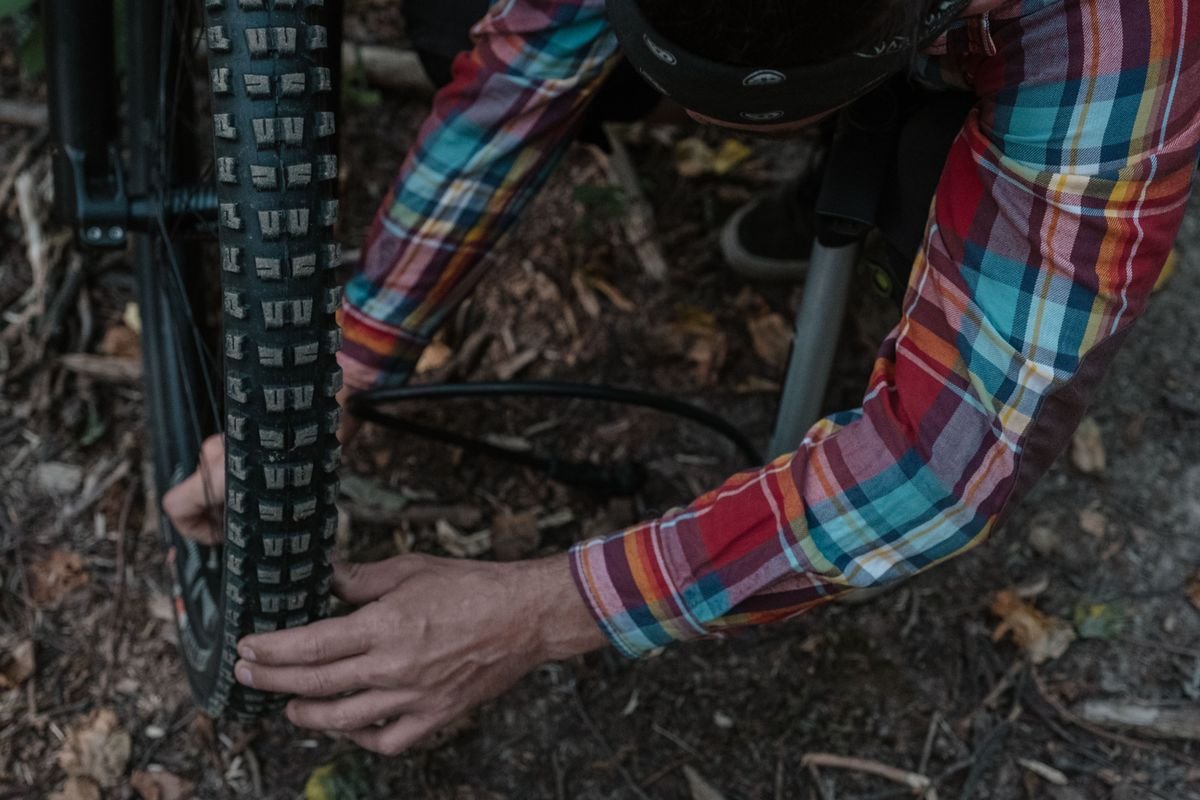
We prioritized the chuck first: a head that leaks or pops off wastes every stroke. Gauge readability and accuracy came next, then base stability, hose length, inflation speed and long-term parts support. Every pump here has years of proven home and shop use.
How often should you top up?
Butyl tubes lose 5-10 psi a week, so check before every ride or at least weekly. Road tires at 60-90 psi drift noticeably in days; fat MTB tires drift less but matter more. A floor pump with a readable gauge makes the habit painless, which is the whole point.
Pump maintenance
Floor pumps need almost nothing: a drop of oil on the leather or rubber plunger once a year, and a chuck gasket swap when the seal gets loose. Keep the hose un-kinked and the pump indoors; UV and freezing garage temperatures age the seals fastest.
Related guides: Lezyne bike pumps, bike valve caps, valve adapters.
FAQ
Do I need a high-pressure pump for road tires?
Modern road tires run 60-90 psi, well within any 160 psi pump’s range. Higher ceilings only matter for track or tubular setups. Stroke efficiency at your actual pressure matters more than the maximum rating.
Digital or analog gauge?
Analog gauges on quality pumps are accurate to about 2-3 psi and never need batteries. Digital gauges read to 0.5 psi but add cost and a battery. For weekly top-ups, a good analog gauge is fine; racers and tubeless tweakers may prefer digital.
Can one pump handle Presta and Schrader?
Yes. Every pump here handles both, either with a dual-sided chuck, an auto-select head or a thread-on adapter. No separate pump needed for the kids’ bikes.
Related guides
Stock spares from the best bike tubes guide, carry a mini pump on every ride, and fix flats trailside with the best bike tire levers and best bike multi-tools.