

Quick answer: Our top pick in this guide to the best clipless pedals for is the Shimano PD-M520 at $45 (overall / beginners). The runner-up is the Shimano PD-R550 at $70. The table below compares all picks by price and who each is best for.
The best clipless pedals give you a secure, efficient connection to the bike and a cleaner pedal stroke than any flat pedal can. Whether you are clipping in for the first time on a commuter or upgrading a road or mountain bike, the right pedals balance easy entry and release, adjustable tension, durability and price. These six cover road, trail and budget duty, and all of them are widely available in the US.
Disclosure: This article contains links to products on Amazon. If you buy through them, we may earn a small commission at no extra cost to you.
Related guide: flat vs clipless pedals.
Quick picks
| Clipless pedals | Best for | System | Price (approx.) |
|---|---|---|---|
| Shimano PD-M520 | Overall / beginners | SPD, 2-bolt | $45 |
| Shimano PD-R550 | Road riding | SPD-SL, 3-bolt | $70 |
| Crankbrothers Candy 1 | Trail and gravel | 2-bolt, 4-sided | $60 |
| Look Keo Classic 3 | Lightweight road | Keo, 3-bolt | $60 |
| Time ATAC XC 2 | Mud and MTB | ATAC, 2-bolt | $70 |
| Venzo SPD | Budget | SPD-compatible | $30 |
1. Shimano PD-M520 — Best overall
The PD-M520 is the default first clipless pedal for a reason. Entry and release are predictable, spring tension adjusts with a single Allen key, and the sealed bearings survive years of neglect. They work with any 2-bolt SPD shoe, shed mud well and come with cleats in the box. If you ride a mix of commuting, gravel and trail and want one pedal that does it all, start here.
- System: Shimano SPD, dual-sided
- Weight: about 380 g per pair
- Tension: adjustable, with cleats included
Pros: Bombproof, cheap, easy to clip into, huge shoe compatibility.
Cons: Small platform can feel tippy under stiff-soled shoes.
Check the Shimano PD-M520 on Amazon
2. Shimano PD-R550 — Best for road riding
The R550 is the entry point to Shimano’s SPD-SL road system, with a wide composite body that spreads pressure across the sole for comfort on long rides. Release tension is adjustable, the wide platform makes power transfer feel solid, and the included yellow cleats have a forgiving six degrees of float that is kind to knees. Pair them with any of the road cycling shoes we recommend.
- System: SPD-SL, single-sided
- Body: composite resin
- Cleats: SH-11 included, 6-degree float
Pros: Stable platform, gentle learning curve, durable.
Cons: Single-sided entry takes practice; cleats are awkward to walk in.
Check the Shimano PD-R550 on Amazon
3. Crankbrothers Candy 1 — Best for trail and gravel
The Candy adds a small platform around Crankbrothers’ four-sided eggbeater mechanism, so you get easy entry from any angle plus a bit of support for trail shoes. The open design is the best in the business at clearing mud, and the 2-bolt cleat works with any MTB shoe. Release feel is softer than SPD, which many riders prefer for technical terrain.
- System: Crankbrothers, 4-sided entry
- Platform: small composite cage
- Weight: about 294 g per pair
Pros: Fantastic mud shedding, four-sided entry, light.
Cons: No tension adjustment; cleats wear faster than SPD.
Check the Crankbrothers Candy 1 on Amazon
4. Look Keo Classic 3 — Best lightweight road option
Look invented the clipless road pedal, and the Keo Classic 3 keeps the formula simple: a light composite body, a wide contact area and adjustable release tension from 8 to 12 Nm. The included grey Keo Grip cleats have 4.5 degrees of float and rubber pads that make coffee-shop walking less treacherous. A solid pick for a first road bike build.
- System: Look Keo, 3-bolt
- Weight: about 278 g per pair
- Tension: 8-12 Nm adjustable
Pros: Light for the price, grippy cleats, smooth engagement.
Cons: Single-sided; cleats wear faster than metal SPD parts.
Check the Look Keo Classic 3 on Amazon
5. Time ATAC XC 2 — Best for mud and MTB
Time’s ATAC system is famous for two things: a generous, self-cleaning engagement that works when everything is caked in mud, and a smooth float that lets your foot pivot naturally. The XC 2 is the affordable version of the pedal cross-country racers use. Release tension adjusts, and the dual-arch design gives a positive, consistent click every time.
- System: Time ATAC, 2-bolt
- Float: 6 degrees angular, 5 mm lateral
- Weight: about 302 g per pair
Pros: Best-in-class mud performance, knee-friendly float, consistent release.
Cons: Composite body scuffs faster than alloy rivals.
Check the Time ATAC XC 2 on Amazon
6. Venzo SPD — Best budget
Venzo’s SPD-compatible pedals cost about half of the big-name options and work with the same 2-bolt cleats, which are included. The die-cast body and sealed bearings are basic but honest, and tension adjustment works the same way as Shimano’s. For a second bike, an indoor trainer setup or a first try at clipless without much commitment, they do the job.
- System: SPD-compatible, dual-sided
- Bearings: sealed
- Includes: 2-bolt cleats
Pros: Very cheap, SPD-cleat compatible, includes cleats.
Cons: Heavier and less refined than Shimano; bearings need more care.
How we chose
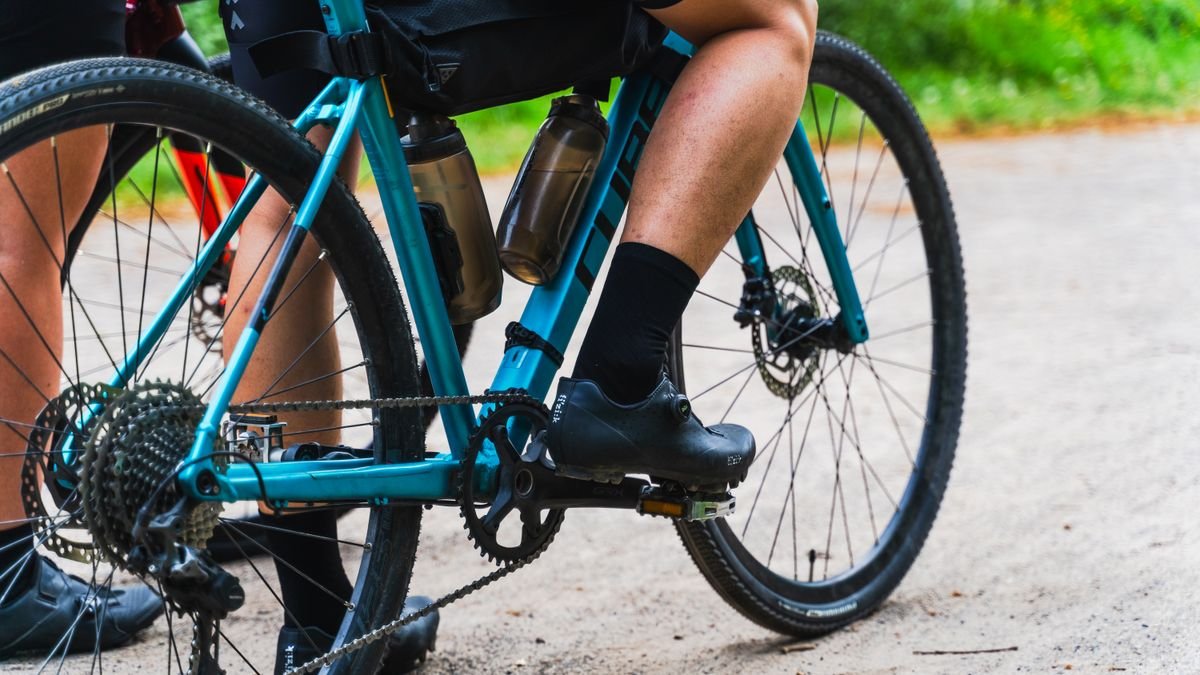
We focused on pedals with long track records, wide cleat compatibility and easy US availability, then compared engagement feel, tension adjustment, mud clearing, platform support and weight. Prices are approximate US list prices and change often, so check the listing before you buy.
Clipless pedal basics
2-bolt vs 3-bolt. Two-bolt systems (SPD, ATAC, Crankbrothers) use recessed cleats and walkable shoes, ideal for MTB, gravel and commuting. Three-bolt systems (SPD-SL, Keo) spread power over a bigger area and suit road riding.
Float. Float is how far your heel can rotate before the pedal releases. More float is easier on knees; beginners should start with 4-6 degrees.
Tension. Set release tension low for the first weeks, then tighten as clipping in and out becomes automatic.
Practice. Clip in and out against a wall or on a trainer before your first ride, and unclip earlier than you think you need to at stops.
Related guides: bike cleats, mountain bike shoes.
FAQ
Why are they called clipless pedals?
The name is historical: they replaced toe clips and straps. Modern clipless pedals snap a cleat on your shoe into a spring-loaded mechanism, so you are clipped in without the old clips.
Which clipless pedals are best for beginners?
A dual-sided 2-bolt pedal like the Shimano PD-M520 with light release tension and multi-release cleats is the friendliest start, because you can clip into either side without looking down.
Do clipless pedals come with cleats?
Most do, including every pedal in this guide. Replacement cleats are cheap, so check them for wear once or twice a season.
Can I use clipless pedals with normal shoes?
Not safely. The small mechanism is slippery under a flat sole. Keep a set of flat pedals for casual rides or use platform adapters.