
Quick answer: Our top pick in this guide to the best power meters for is the Power meter at Approx. price (best for). The runner-up is the Favero Assioma Uno at about $460. The table below compares all picks by price and who each is best for.
Best power meters are the single most effective training upgrade you can bolt onto a bike: watts do not lie about your fitness the way speed and heart rate do, and a reliable power meter turns every ride into useful training data. Prices have dropped hard in the last few years, and accurate, proven options now start around $150. We compared accuracy, reliability, battery life, and compatibility across the most popular power meters on Amazon, and these six earn our recommendation.
Disclosure: As an Amazon Associate, we earn from qualifying purchases made through links on this page, at no extra cost to you.
Quick picks: the best power meters at a glance
| Power meter | Best for | Approx. price |
|---|---|---|
| Favero Assioma Uno | Best overall | ~$460 |
| Garmin Rally RS200 | Best dual-sided | ~$1,100 |
| 4iiii Precision | Best crank-arm value | ~$320 |
| Stages Power L | Best crank-based alternative | ~$290 |
| Magene P715 | Best budget dual pedals | ~$260 |
| XCADEY X-Power | Best budget pick | ~$150 |
The 6 best power meters
1. Favero Assioma Uno – best overall
The Assioma Uno is the power meter we recommend most: a single-sided pedal-based system with automatic temperature compensation, a claimed +/-1% accuracy that independent testing consistently confirms, and a rechargeable battery good for about 50 hours. Installation is genuinely as easy as threading on pedals, and swapping between bikes takes two minutes with an 8 mm hex key.
- Type: single-sided pedal (left)
- Accuracy: +/-1%, auto temp compensation
- Battery: rechargeable, ~50 hours
- Connectivity: ANT+ and Bluetooth
Pros: Proven accuracy and reliability across years of reviews, the easiest install and bike-swap in the category, and no special torque tools needed. The Duo upgrade path lets you add the right pedal later for dual-sided data.
Cons: Single-sided, so it doubles your left leg’s power – fine for most riders, but those tracking left/right balance need the Duo. Pedal bodies add some stack height and look bulky.
2. Garmin Rally RS200 – best dual-sided
Garmin’s Rally RS200 measures both legs independently, tracking power balance, seated versus standing time, and platform center offset – data no single-sided meter can give you. The RS200 uses Shimano SPD-SL bodies (Rally XC and RK versions cover SPD and Look), and Garmin’s ecosystem integration with Edge computers and Connect is the deepest in the business.
- Type: dual-sided pedal
- Accuracy: +/-1%
- Battery: LR44/SR44 cells, ~120 hours
- Metrics: power balance, seated/standing, platform offset
Pros: The most complete pedaling data available, excellent accuracy, and pedal bodies swap between road SPD-SL, SPD, and Look with a conversion kit. If you live in Garmin Connect, this is the obvious choice.
Cons: By far the most expensive pick here. Battery changes require a small tool kit, and the pedal bodies are heavier than standard SPD-SL.
3. 4iiii Precision – best crank-arm value
The 4iiii Precision is a factory-installed power meter bonded to a left crank arm – Shimano 105, Ultegra, and Dura-Ace options cover most road bikes. Accuracy is proven at +/-1%, the pod is tiny at about 9 grams, and the coin-cell battery runs around 100 hours. It is the most discreet power meter you can buy.
- Type: single-sided left crank arm
- Accuracy: +/-1%
- Battery: CR2032, ~100 hours
- Options: 105, Ultegra, Dura-Ace cranks
Pros: Invisible installation that keeps your preferred pedals, light, accurate, and reasonably priced. Swapping cranks between bikes with the same groupset is a normal crank swap.
Cons: Single-sided only, and you must match the crank to your groupset. Not transferable between bikes with different crank standards.
4. Stages Power L – best crank-based alternative
Stages basically created the affordable left-crank power meter, and the Gen 3 Power L units have fixed the battery-door and dropout issues of early generations. The unit adds about 20 grams to a stock left crank, measures at +/-1.5%, and runs about 200 hours on a CR2032. If you want crank-based power with the longest track record, this is it.
- Type: single-sided left crank arm
- Accuracy: +/-1.5%
- Battery: CR2032, ~200 hours
- Options: Shimano, SRAM, Campagnolo cranks
Pros: The longest real-world pedigree in budget power, excellent battery life, and active temperature compensation. Broad crank compatibility including MTB options.
Cons: Slightly looser accuracy spec than 4iiii or Favero. Single-sided, and early-generation reliability stories still follow the brand around even though Gen 3 is solid.
5. Magene P715 – best budget dual pedals
Magene’s P715 is the budget power meter that finally gets the important things right: dual-sided pedal measurement, +/-1% claimed accuracy that holds up well in independent comparisons, and about 120 hours per charge. It undercuts the Garmin Rally by over $800 while delivering the headline feature – left/right power – that budget riders usually cannot get.
- Type: dual-sided pedal
- Accuracy: +/-1%
- Battery: rechargeable, ~120 hours
- Connectivity: ANT+ and Bluetooth
Pros: Dual-sided power at a single-sided price. Easy pedal install and bike swaps, solid build quality, and a growing track record of reliable data.
Cons: Long-term durability is less proven than Favero or Garmin, and the companion app is functional but basic. Cleats are Look-style KEO compatible only.
6. XCADEY X-Power – best budget pick
XCADEY’s spider-based power meter is the cheapest legitimate way to get accurate watts on your bike. It mounts between your crank and chainrings (Shimano and SRAM patterns supported), measures both sides’ combined power at the spider, and costs about what a decent pair of tires runs. The active temperature compensation and +/-1.5% accuracy are remarkable for the price.
- Type: crank spider
- Accuracy: +/-1.5%
- Battery: rechargeable, ~150 hours
- Fits: Shimano 4-bolt, SRAM 3-bolt, and others
Pros: Cheapest accurate power available, spider placement measures total power (not one leg doubled), and the rechargeable battery lasts months between charges.
Cons: Installation requires crank removal and sometimes a spider tool, and compatibility must be checked carefully against your crankset. Support and documentation are thinner than the Western brands.
How we chose
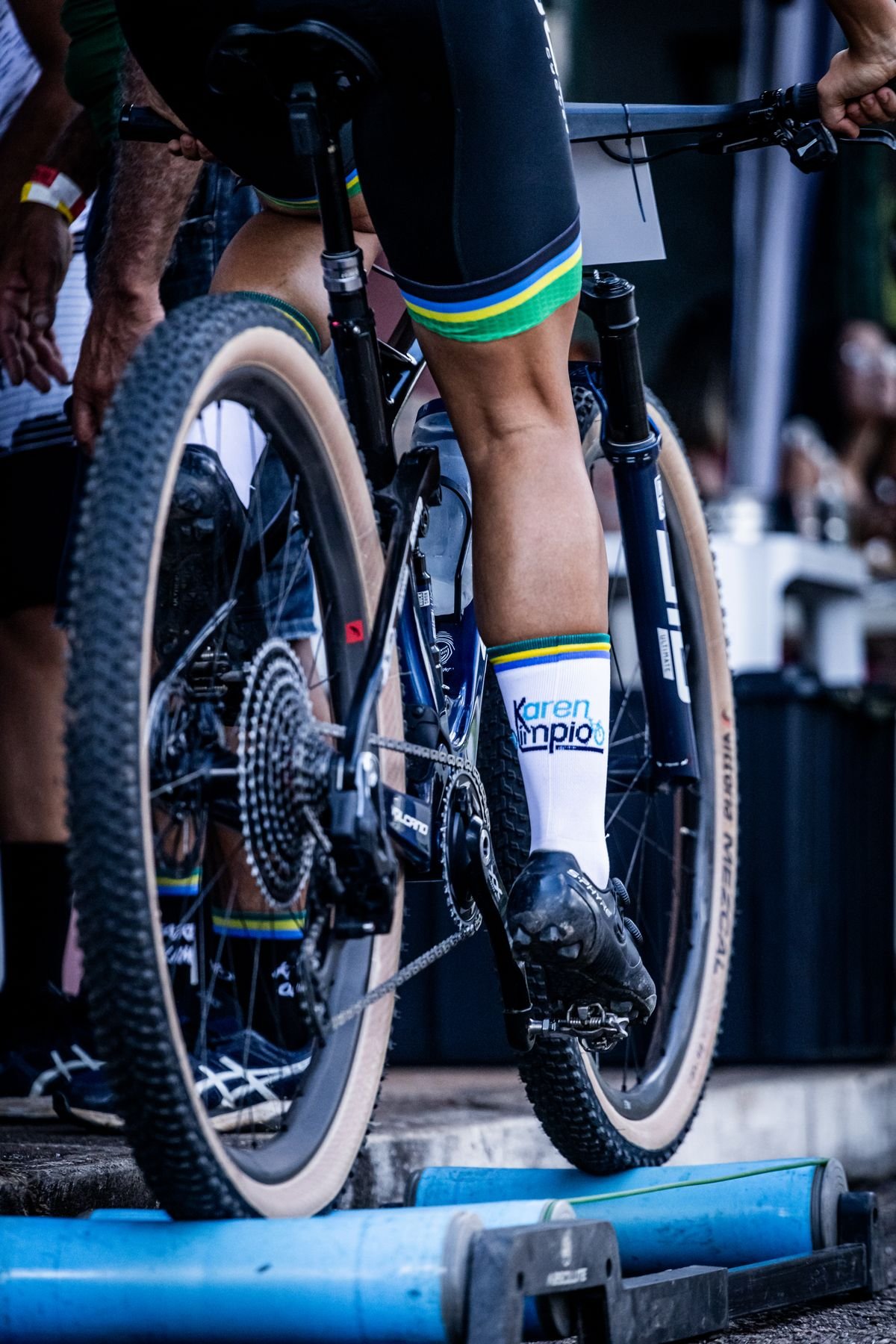
We shortlisted power meters with verified accuracy from independent test data and long owner histories, then compared measurement type, battery life, ease of installation and bike swaps, crank and cleat compatibility, and price. Every pick here works with any modern bike computer or phone via ANT+ or Bluetooth. Prices are approximate US list and move around, so check the listing before you buy.
Power meter types explained
Pedal-based (Favero, Garmin, Magene) is the easiest to install and swap between bikes – if you have multiple bikes or travel, pedals win. Crank-arm units (4iiii, Stages) hide the tech on your left crank and keep your favorite pedals, at single-sided pricing. Spider units (XCADEY) measure total power and cost the least, but are crank-specific and harder to swap.
Single or dual sided? Most riders’ legs are within a few percent of each other, so a single-sided meter (which doubles one leg) is accurate enough for training. Dual-sided matters for riders rehabbing imbalances, data obsessives, or those whose left/right split is known to drift under fatigue.
What to pair it with. You need a head unit: any of the best bike computers will display and record power. If you are upgrading the bike itself first, our road bikes under $1,000 and gravel bikes guides cover the machine side.
Related guide: our Garmin Edge bike computers guide.
FAQ
Is a power meter worth it for a beginner?
Yes, arguably more than for experts. Power gives beginners objective pacing for intervals and prevents the classic mistake of riding too hard on easy days. You do not need a coach to benefit – free plans from most head-unit apps will put your watts to work.
How accurate are budget power meters?
The good ones (everything in this list) test within 1-2% of reference meters, which is more than enough for training. What you lose at budget prices is durability, support, and sometimes left/right data – not usable accuracy.
Do power meters work with Zwift?
Yes. Any ANT+ or Bluetooth power meter here pairs directly with Zwift, TrainerRoad, Wahoo SYSTM, and similar apps, no speed sensor needed. Pairing a power meter with one of the best indoor bike trainers also upgrades your indoor data accuracy.
How often should I calibrate a power meter?
Run the zero-offset (calibration) before important rides and after big temperature changes – it takes 10 seconds from your head unit. Modern meters with temperature compensation need it less often, but a weekly zero-offset is good hygiene.