

Quick answer: Our top pick in this guide to the best gravel handlebars for is the Handlebar at Approx. price (best for). The runner-up is the Salsa Cowchipper at about $70. The table below compares all picks by price and who each is best for.
Best gravel handlebars can transform a bike that feels twitchy on loose descents into one that tracks with real confidence, and the right flare and width can calm your wrists on day-long mixed-surface rides. The stock bar on most gravel bikes is a generic 31.8 mm drop bar chosen to hit a price point, not to fit your hands or your terrain. We dug into specs, owner feedback, and hands-on reviews to find the best gravel handlebars you can order on Amazon right now, from a $35 budget flare to a $160 ergonomic specialist.
Disclosure: As an Amazon Associate, we earn from qualifying purchases made through links on this page, at no extra cost to you.
Related guide: gravel bike vs mountain bike.
Quick picks: the best gravel handlebars at a glance
| Handlebar | Best for | Approx. price |
|---|---|---|
| Salsa Cowchipper | Best overall flare | ~$70 |
| Zipp Service Course 70 XPLR | Best premium aluminum | ~$80 |
| Ritchey Comp VentureMax | Best bio-bend ergonomics | ~$50 |
| FSA Omega Compact | Best compact drop for mixed riding | ~$60 |
| Redshift Kitchen Sink | Best wide adventure bar | ~$160 |
| UPANBIKE Drop Bar | Best budget pick | ~$35 |
The 6 best gravel handlebars
1. Salsa Cowchipper – best overall
The Cowchipper is the bar that popularized flared drops for gravel, and it still sets the template: 24 degrees of flare, a shallow 116 mm drop, and a short 96 mm reach that suits both modern short-stem builds and older frames. The 7050 aluminum construction keeps weight reasonable, and the shape works equally well for road-style fast gravel and loaded bikepacking.
- Flare: 24 degrees; widths 44-52 cm (measured at the hoods)
- Drop/reach: 116 mm / 96 mm
- Weight: ~320 g (46 cm)
- Clamp: 31.8 mm
Pros: The flare angle is a genuine sweet spot – enough extra control in the drops without making the hoods feel rotated or awkward for road sections. Deep, stable drops grip for technical descents. Proven shape with years of happy owners.
Cons: Costs more than generic flared bars, and the graphics are polarizing. Not the lightest option if you are chasing grams.
2. Zipp Service Course 70 XPLR – best premium aluminum
Zipp’s Service Course 70 XPLR is built specifically for gravel and all-road riding, with 11 degrees of flare, 5 degrees of outsweep, and a 70 mm reach that keeps the hoods close for a modern fit. The shallow 115 mm drop means most riders actually use the drops, which is the whole point of a gravel bar. Finish quality is excellent, with clear centering marks and a tough bead-blasted surface.
- Flare: 11 degrees with 5-degree outsweep
- Drop/reach: 115 mm / 70 mm
- Weight: ~300 g (44 cm)
- Widths: 40-46 cm
Pros: The moderate flare keeps the hoods feeling like a road bar for fast group rides while still opening up wrist clearance and control in the drops. Short reach works brilliantly with modern gravel geometry. Premium finish and accurate markings make setup easy.
Cons: Riders who want a very aggressive flare for singletrack-heavy routes will find it conservative. Price sits at the top of the aluminum market.
3. Ritchey Comp VentureMax – best ergonomic bend
The VentureMax’s signature “bio-bend” – a flattened, swept section on the tops and a gentle wave in the drops – spreads pressure across your palms better than any round-tube bar in this list. With 24 degrees of flare and generous width options, it is a favorite of bikepackers and anyone fighting hand numbness on long days. The Comp version is 6061 aluminum and sensibly priced.
- Flare: 24 degrees
- Drop/reach: 102 mm / 76 mm
- Weight: ~300 g (44 cm)
- Widths: 42-46 cm (wider in carbon versions)
Pros: The bio-bend tops are the most comfortable place to rest your hands in the segment. Big flare gives proper mountain-bike-style control in the drops. Short reach and shallow drop suit shorter riders and touring positions.
Cons: The shaped tops limit how far inboard you can clamp accessories like GPS mounts and lights. The wave in the drops is not for everyone – try before you commit if you can.
4. FSA Omega Compact – best compact drop
If your gravel riding skews toward fast road sections and smooth dirt, a compact road-style bar like the FSA Omega can be the right call. The 125 mm drop and 80 mm reach put the drops genuinely within reach, and the 6066 aluminum construction is light and stiff. There is minimal flare, so hoods and drops both feel familiar to road riders crossing over.
- Flare: minimal (~2 degrees)
- Drop/reach: 125 mm / 80 mm
- Weight: ~285 g (42 cm)
- Widths: 40-44 cm
Pros: Excellent value for a name-brand aluminum bar, light for the money, and the compact bend suits smaller hands. Ideal if your “gravel” is 70 percent pavement.
Cons: Minimal flare means less control and wrist clearance on rough descents than the flared options here. Not the pick for bikepacking or technical terrain.
5. Redshift Kitchen Sink – best wide adventure bar
The Kitchen Sink is deliberately extreme: widths up to 50 cm, 20 degrees of flare, 25 degrees of backsweep on the tops, and 20 mm of rise. It is built for bikepacking, loaded touring, and riders who want maximum stability and hand positions on all-day rides. The optional loop extensions (sold separately) add even more positions for ultra-distance events.
- Flare: 20 degrees; 25-degree backsweep
- Drop/reach: 110 mm / 85 mm, plus 20 mm rise
- Weight: ~340 g (47 cm)
- Widths: 44-50 cm
Pros: The most comfortable long-distance position set in this list, with real rise that takes pressure off your lower back. Huge width and flare give loaded-bike control on rough terrain. Thoughtfully engineered, not just bent tubing.
Cons: The widest options can feel sluggish on fast group rides, and the price is firmly premium. Overkill if your riding is mostly smooth gravel and road.
6. UPANBIKE Drop Bar – best budget pick
UPANBIKE’s generic flared drop bar proves you do not need to spend much to try a gravel-specific shape. It offers 25 degrees of flare in several widths for roughly a third of the price of the big brands. Finish and consistency are a step below, but the fundamentals – clamp diameter, flare, and drop – are all present and correct.
- Flare: 25 degrees
- Drop/reach: ~120 mm / ~90 mm
- Weight: ~330 g
- Widths: 42-46 cm
Pros: Cheapest way to experiment with a flared bar and see if the shape suits you. Perfectly serviceable aluminum construction for the price. Wide flare gives real off-road control.
Cons: QC and finish are inconsistent, and markings are minimal, so set lever position carefully. Heavier than the premium options and no brand support if something goes wrong.
How we chose
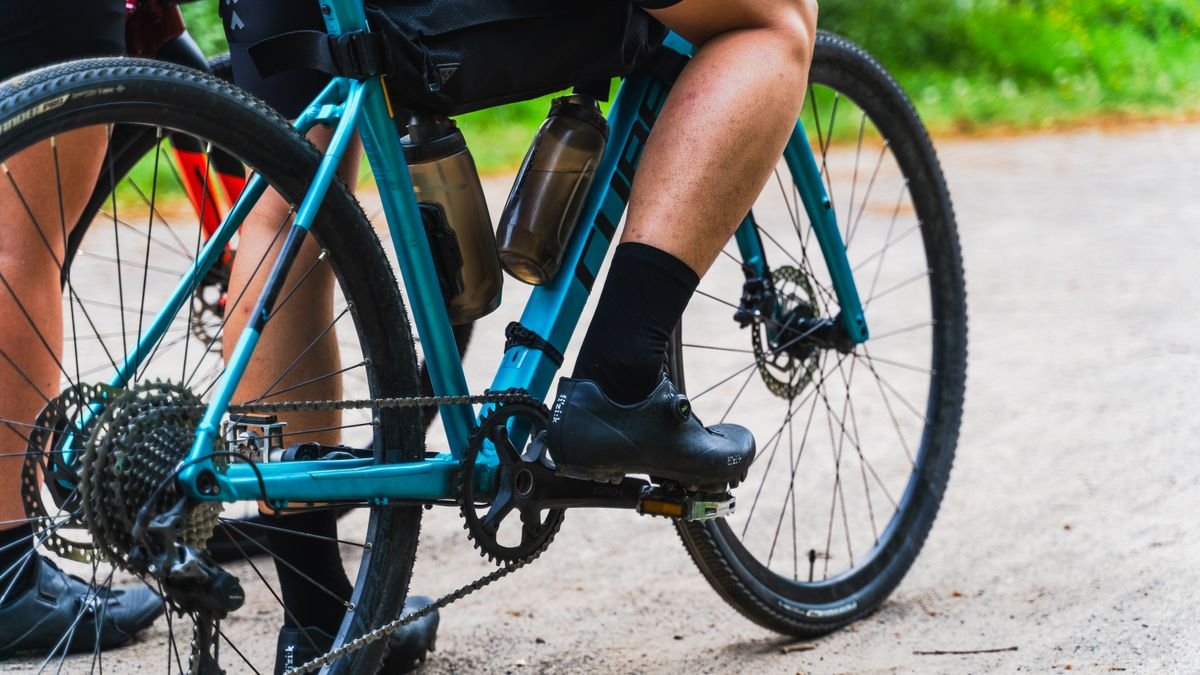
We shortlisted bars that appear repeatedly in gravel and bikepacking community recommendations, own a clearly defined fit philosophy, and are consistently stocked on Amazon US. From there we compared flare, reach, drop, width range, weight, and price, and weighted verified owner feedback on durability and comfort. Every bar here uses a 31.8 mm clamp, which covers the overwhelming majority of modern gravel stems.
What to look for in gravel handlebars
Flare. Flare is the outward angle of the drops, measured from vertical. Around 10-12 degrees keeps things feeling road-like; 20-25 degrees adds real control and wrist clearance in the drops for rough terrain. More flare also rotates your wrist angle on the hoods, so bigger is not automatically better.
Width. Gravel riders often size up one step from their road bar – going from 42 to 44 cm, for example – because width at the drops (where flare opens it up further) aids control. Remember that most gravel bars are measured at the hoods, so a “46 cm” flared bar is considerably wider in the drops.
Reach and drop. Shorter reach (70-90 mm) and shallower drop (100-125 mm) put the drops within actual use, which matters more off-road where you want to descend in the drops for the lowest, most stable position.
Material. Aluminum wins on value and crash tolerance; carbon saves 60-100 g and damps vibration, at a higher price and with more care needed at the clamp. For most riders, a good aluminum bar is the smart buy.
Once you have the right bar, finish the cockpit with fresh handlebar tape, and if you are loading up for bikepacking, our guides to handlebar bags and frame bags cover the rest of the front end. Shopping for the bike itself? Start with our best gravel bikes roundup.
Related guide: our bike handlebar tape guide.
FAQ
Are flared handlebars worth it for gravel riding?
For most gravel riders, yes. Flare opens up the drops, giving you more leverage on the bars and more wrist clearance, which translates to better control on loose descents and rough washboard. If your gravel riding is mostly smooth dirt and road, a mild flare or even a compact road bar may suit you better.
What width gravel handlebar should I get?
Match the bar to your shoulder width at the hoods, then remember flare adds effective width in the drops. Most riders between 5’6″ and 6’1″ are well served by 42-46 cm bars measured at the hoods. Go wider if you ride technical terrain or carry a loaded front bag.
Can I put a gravel handlebar on my road bike?
Yes – as long as your stem clamp is 31.8 mm, any bar here will fit. It is a popular upgrade for converting an endurance road bike into a light gravel rig. Just account for the extra reach in the drops when setting your brake levers.
Do I need new shifters when changing handlebars?
No. Your existing levers clamp on the same way. You will need to re-wrap the tape and re-set lever angle, so budget for fresh bar tape and a torque wrench to hit the stem clamp spec.