
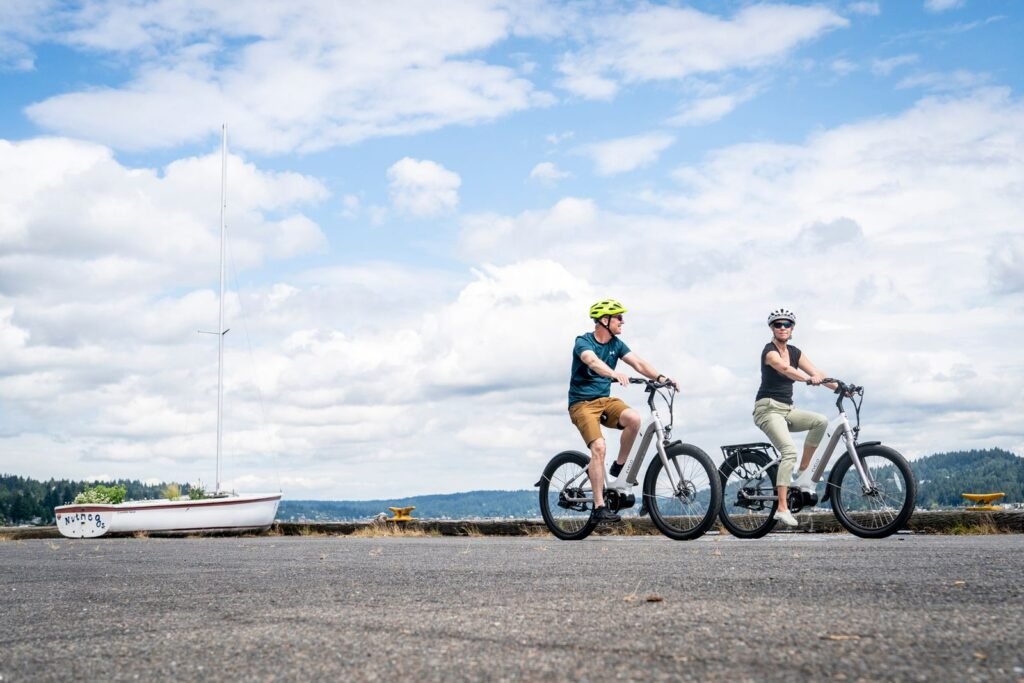
Quick answer: The best e-bike helmet here is the Giro Camden MIPS at about $150. The ABUS Pedelec 2.0 (about $150) is the pick for speed pedelecs, the Bern Hudson MIPS (about $120) is the best certified value, and the Lumos Ultra (about $160) is the best smart helmet. Prices are approximate.
6 Best Ebike Helmets for 2026: Certified Protection for Faster Riding
Disclosure: This article contains links to products on Amazon. If you buy through them, we may earn a small commission at no extra cost to you. It helps us keep the lights on and the reviews honest.
An ebike gets you to 20 or 28 mph with no fitness required, and that speed changes the helmet math. The best ebike helmets add deeper rear coverage, rotational impact protection like MIPS, and in some cases the Dutch NTA 8776 certification built specifically for faster e-bikes. We compared six lids that cover commuting, speed pedelecs, and connected riding, from a value pick to a helmet with its own intercom.
Prices below are approximate US list prices at the time of writing and move around, so treat them as a guide, not a quote.
Related guide: e-bike vs regular bike.
The best ebike helmets at a glance
| Helmet | Best for | Approx. price |
|---|---|---|
| Giro Camden MIPS | Best overall | ~$150 |
| ABUS Pedelec 2.0 | Best for speed pedelecs | ~$150 |
| Bern Hudson MIPS | Best certified value | ~$120 |
| Thousand Chapter MIPS | Best style | ~$145 |
| Lumos Ultra | Best smart helmet | ~$160 |
| Sena R1 EVO | Best for group rides | ~$200 |
How we chose

For ebike speeds we weighted protection first: every pick carries MIPS or an equivalent rotational liner, and two are certified to NTA 8776, the standard written for 28 mph pedelecs. After that we looked at rear-of-head coverage, ventilation for summer commutes, integrated lights or mounts for them, fit systems that work one-handed, and real US availability. Every helmet below is sold on Amazon US at the time of writing and is certified to at least the US CPSC bicycle standard.
1. Giro Camden MIPS – best overall
The Camden MIPS is the helmet most ebike commuters should buy. It pairs MIPS with a deep, skate-style shell that covers more of the back of your head than a road helmet, adds a rechargeable rear light mount, and manages to vent well enough for August traffic. The Roc Loc City fit system cinches evenly with one hand, the padding is plush without being hot, and the look is clean enough for the office. It is not NTA certified, but for Class 1 and Class 2 riding it hits the sweet spot of protection, comfort, and price.
Pros: MIPS liner with deep rear coverage; rear light mount included; excellent fit system; genuinely good ventilation for a city shell.
Cons: Not NTA 8776 certified; light is an add-on, not built in; one shell size per fit range.
Specs: MIPS; CPSC certified; Roc Loc City fit; rear light mount. Approx. $150.
See the Giro Camden MIPS on Amazon
2. ABUS Pedelec 2.0 – best for speed pedelecs
If your ebike assists to 28 mph, the Pedelec 2.0 is the helmet built for exactly that. It is certified to NTA 8776, the Dutch standard for speed pedelecs, with a deep temple and rear profile that covers far more than a CPSC lid has to. A FidLock magnetic buckle closes with gloves on, the integrated rain cover tucks into the shell, and the rear reflector plus light loop keep you visible in winter commutes. It runs warm on slow climbs and looks unapologetically European, but for fast Class 3 riding nothing else here matches its coverage.
Pros: NTA 8776 certified for 28 mph riding; very deep coverage; FidLock magnetic buckle; integrated rain cover.
Cons: Warm at low speed; utilitarian looks; fewer size options in US stock.
Specs: NTA 8776 + CPSC; deep shell; FidLock; rain cover. Approx. $150.
See the ABUS Pedelec 2.0 on Amazon
3. Bern Hudson MIPS – best certified value
The Hudson MIPS is the cheapest way into an NTA 8776 certified helmet we would actually wear. Bern built it for e-bike speeds up to 27 mph with MIPS, a reinforced shell, and a low-profile visor that keeps sun and rain off your glasses. The Compass Fit system adjusts evenly around the whole head rather than just the back, and the shell shape looks like a normal city helmet rather than safety equipment. Ventilation is fine rather than great, and the strap hardware feels a step below Giro’s, but certified protection at this price is hard to argue with.
Pros: NTA 8776 certified at a mid-range price; MIPS included; integrated visor; understated styling.
Cons: Average ventilation; strap hardware feels budget; heavier than road-style lids.
Specs: NTA 8776 + CPSC; MIPS; Compass Fit; visor. Approx. $120.
See the Bern Hudson MIPS on Amazon
4. Thousand Chapter MIPS – best style
The Chapter MIPS is the helmet for riders who refused to wear one until now. It wraps MIPS and a secret PopLock – a hidden channel you can lock the helmet to your bike through – in a vintage moto profile that draws compliments instead of smirks. A magnetic tail light pops on the back for night rides, the magnetic buckle closes one-handed, and the vegan leather straps elevate the whole package. It vents better than the original Thousand Heritage but still trails the Giro on hot days, and you pay for the design. For city ebikers who value looking normal, it is money well spent.
Pros: Best-looking helmet here; MIPS plus NTA-friendly coverage; magnetic tail light and buckle; PopLock locks helmet to bike.
Cons: Premium price for the category; ventilation still behind sportier lids; light is small.
Specs: MIPS; CPSC certified; magnetic buckle; USB tail light; PopLock. Approx. $145.
See the Thousand Chapter MIPS on Amazon
5. Lumos Ultra – best smart helmet
The Lumos Ultra builds 360-degree lighting straight into the shell: a white headlight strip up front, red LEDs behind, and turn signals you trigger from a handlebar remote or an Apple Watch. For dawn and dusk commuting it removes the “did I charge my lights” anxiety entirely, and the app lets you tune brightness, flash patterns, and battery tracking. The helmet itself is MIPS-equipped and reasonably vented, though the electronics add weight and the shell runs warm. Treat it as your visibility system and helmet in one purchase and the price makes sense.
Pros: Integrated front, rear, and turn signal LEDs; MIPS; app and remote control; strong battery life for daily commutes.
Cons: Heavier than passive helmets; needs regular charging; electronics complicate replacement after a crash.
Specs: MIPS; CPSC certified; integrated LEDs with turn signals; USB-C charging. Approx. $160.
6. Sena R1 EVO – best for group rides
The R1 EVO is a helmet with a Sena intercom built in: Mesh networking links your riding group at up to half a mile, Bluetooth pipes music and calls to the integrated speakers, and the microphone handles voice commands cleanly at speed. For couples or groups who ride ebikes together it is genuinely useful, and the CPSC-certified shell underneath is a decent mid-coverage commuter lid in its own right. The downsides are the usual ones: more weight, more charging, more cost, and speakers you will hear wind roar through at 28 mph. If you ride solo with earbuds, skip it; if you ride in a pack, nothing else compares.
Pros: Mesh intercom for group chat; Bluetooth music and calls; integrated speakers and mic; solid commuter shell underneath.
Cons: Most expensive pick here; heavy; wind noise at high speed; another device to charge.
Specs: CPSC certified; Mesh + Bluetooth intercom; integrated audio. Approx. $200.
FAQ
Do I need a special helmet for an ebike?
Any CPSC-certified bicycle helmet is legal and protective on a Class 1 or Class 2 ebike. Because ebikes hold higher speeds more of the time, we recommend helmets with MIPS and deeper rear coverage at minimum, and an NTA 8776 certified helmet like the ABUS Pedelec 2.0 or Bern Hudson if you ride a Class 3 bike that assists to 28 mph.
What is NTA 8776?
NTA 8776 is a Dutch standard written for speed pedelecs. It tests at higher impact energies than the US CPSC standard and requires more coverage around the temples and the back of the head. It is the closest thing to an “ebike helmet certification” that exists today.
Is MIPS worth it on an ebike?
Yes. MIPS and similar rotational liners reduce the twisting forces linked to concussions when you hit the ground at an angle, which is how most real crashes happen. Every helmet in this list includes it or an equivalent, and we would not buy an ebike helmet without it.
How often should I replace my helmet?
Replace any helmet after a crash, even if it looks fine – the foam crushes once. Without a crash, most brands suggest every three to five years as sweat, UV, and knocks degrade the materials. Smart helmets with batteries follow the same rule.
The bottom line
The Giro Camden MIPS is the best ebike helmet for most riders in 2026: MIPS, deep coverage, great fit, fair price. Class 3 riders should step up to the NTA 8776 certified ABUS Pedelec 2.0 or the cheaper Bern Hudson, night commuters will love the Lumos Ultra’s built-in lights, and group riders should go straight to the Sena R1 EVO. Round out the setup with one of the best bike lights and a mirror from our best bike mirrors guide, and if you are still shopping for the bike itself, start with the best electric bikes under $2,000.
Prices are approximate US list prices at the time of writing and may vary. We may earn a commission from qualifying purchases made through the links above.