

Quick answer: Our top pick in this guide to the best bike torque wrenches for is the Park Tool TW-5.2 at about $75 (best overall). The runner-up is the Topeak D-Torq Wrench DX at about $170. The table below compares all picks by price and who each is best for.
Best bike torque wrenches pay for themselves the first time they stop you from crushing a carbon handlebar or stripping a seatpost bolt. Modern bikes are full of parts with tight torque specs printed right next to the bolt, and a reliable click-type or digital torque wrench is the only way to hit those numbers every time. We compared accuracy, torque range, bit selection, and build quality across the most popular options on Amazon, and these six earn our recommendation.
Disclosure: As an Amazon Associate, we earn from qualifying purchases made through links on this page, at no extra cost to you.
Related guide: bike pre-ride safety check.
Quick picks: the best bike torque wrenches at a glance
| Wrench | Best for | Approx. price |
|---|---|---|
| Park Tool TW-5.2 | Best overall | ~$75 |
| Topeak D-Torq Wrench DX | Best digital | ~$170 |
| PRO Bike Tool Torque Wrench Set | Best complete kit | ~$80 |
| Venzo Torque Wrench Set | Best budget kit | ~$35 |
| Feedback Sports Range | Best ratchet style | ~$40 |
| Prestacycle TorqRatchet | Best compact/travel | ~$30 |
How we chose
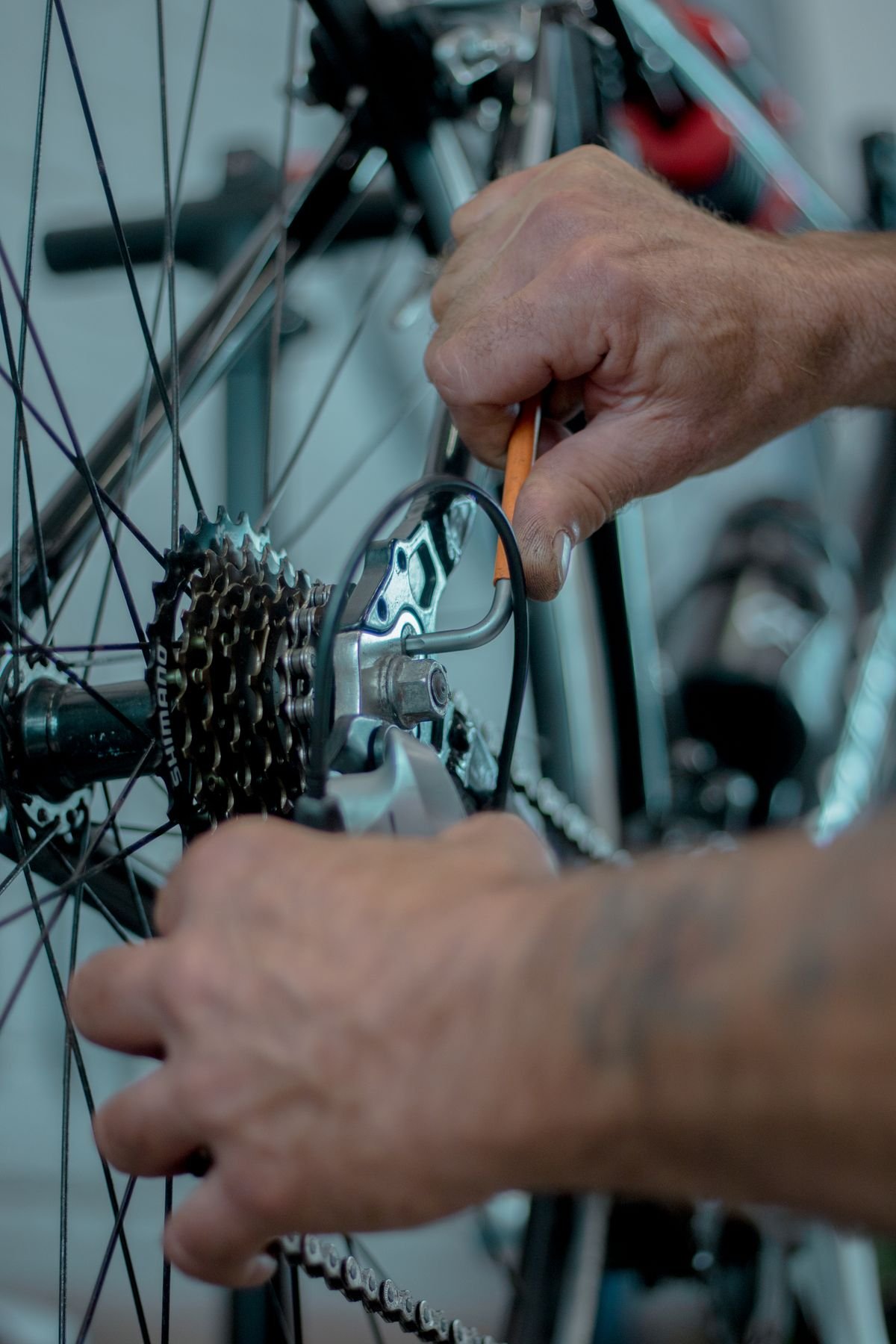
We short-listed the torque wrenches that professional mechanics and long-term owners trust, then compared them on the criteria that matter on the bench: rated accuracy (look for plus or minus four percent or better), torque range (bike work is mostly 2 to 20 Nm), included bits, ratcheting action, calibration support, and case quality. Every pick below covers the small fastener range bikes actually use and is widely available on Amazon US at the time of writing.
The 6 best bike torque wrenches
1. Park Tool TW-5.2: best overall
Park Tool’s TW-5.2 is the shop standard: a click-type quarter-inch wrench covering 2 to 14 Nm, which is exactly where stems, seatposts, handlebars, and derailleur bolts live. It is simple, durable, and Park Tool still services and recalibrates it.
- Range: 2-14 Nm, click type
- Pros: proven accuracy and durability; easy-to-read scale; reversible ratchet head; backed by the best service network in the business
- Cons: no bits or sockets included; lower max range than some kits; premium price for the wrench alone
Approx. price: ~$75. Check price on Amazon
2. Topeak D-Torq Wrench DX: best digital
The D-Torq DX is the digital option for riders who want exact numbers and alerts instead of a click. It reads to a tenth of a Nm, beeps as you approach target, displays Nm, in-lb, ft-lb, and kg-cm, and covers 1 to 20 Nm.
- Range: 1-20 Nm, digital
- Pros: precise readout with audible and visual alerts; wide range; includes bits and a hard case; great for documenting builds
- Cons: expensive; needs batteries; electronics are less forgiving of shop abuse than a click wrench
Approx. price: ~$170. Check price on Amazon
3. PRO Bike Tool Torque Wrench Set: best complete kit
PRO Bike Tool’s set is the one-box answer: a 2 to 20 Nm click wrench with a full spread of hex, Torx, and Phillips bits in a proper molded case. For a home mechanic starting from zero, it covers every fastener on a modern bike.
- Range: 2-20 Nm, click type
- Pros: complete bit selection; clear Nm and in-lb scales; calibration certificate in the box; strong owner reviews for long-term accuracy
- Cons: case hinge is a known weak point; bits are adequate rather than premium; heavier than shop-grade wrenches
Approx. price: ~$80. Check price on Amazon
4. Venzo Torque Wrench Set: best budget kit
Venzo’s kit delivers the same basic formula as the big-name sets for about half the money: a 2 to 24 Nm click wrench, common bits, and a case. Accuracy in owner testing consistently lands within its rated tolerance, which is all most home mechanics need.
- Range: 2-24 Nm, click type
- Pros: remarkable value; wider range than most rivals; includes Torx and hex bits most bikes need
- Cons: finish and plastics feel budget; scale markings are small; no recalibration service to speak of
Approx. price: ~$35. Check price on Amazon
5. Feedback Sports Range: best ratchet style
Feedback Sports’ Range takes a different shape: a compact ratcheting wrench with a beam-and-dial torque indicator, covering 2 to 10 Nm. It is fast to use, small enough to live in a tool roll, and doubles as an everyday ratchet for cockpit bolts.
- Range: 2-10 Nm, beam indicator with ratchet
- Pros: excellent for frequent small jobs; compact and light; no calibration drift because there is no spring; pleasant ratchet action
- Cons: beam reading requires looking at the dial while tightening; 10 Nm ceiling misses some crank and cassette specs; no bits included
Approx. price: ~$40. Check price on Amazon
6. Prestacycle TorqRatchet: best compact/travel
The TorqRatchet is the take-it-with-you option: a pocket-size ratchet with a built-in 2 to 10 Nm torque beam and a twelve-bit set that covers everything from stem bolts to disc rotors. For travel tool kits and pre-race checks it is hard to beat.
- Range: 2-10 Nm, beam indicator
- Pros: genuinely pocketable with its own bit case; quality bits; doubles as a regular multi-tool ratchet; inexpensive
- Cons: short handle limits leverage; dial markings take practice to read accurately; not a substitute for a full-size wrench on the bench
Approx. price: ~$30. Check price on Amazon
Click, digital, or beam: which torque wrench type?
Click-type wrenches are the default for good reason: set the number, pull until it clicks, done. They are durable and hold calibration well if stored at their lowest setting. Digital wrenches give the most precise feedback and are ideal for documenting exact torque on builds, but cost more and need batteries. Beam-style tools like the Range and TorqRatchet have no internal spring to fatigue, so they stay accurate forever, but you must watch the scale while tightening. For most home mechanics, a click-type kit in the 2 to 20 Nm range is the right first purchase, with a beam ratchet as a handy second tool.
A torque wrench is one piece of a working home shop. Our guides to the best repair stands, best multi-tools, and best tool kits cover the rest of the bench.
Related guides: bike spoke wrenches, brake bleed kits, Park Tool bike tools.
Frequently asked questions
Why do bikes need a torque wrench at all?
Carbon fiber and lightweight alloy parts have narrow safe clamping ranges. Too loose and the part slips; too tight and you can crush a handlebar or strip threads. Manufacturer torque specs remove the guesswork, but only if you can measure the torque accurately.
What torque range do I need for a bicycle?
Most bike fasteners live between 4 and 8 Nm: stems, seatposts, handlebars, and derailleurs. A 2 to 14 or 2 to 20 Nm wrench covers essentially everything except some crank and cassette lockring specs, which need larger tools anyway.
How do I keep a click torque wrench accurate?
Store it wound down to its lowest setting, never use it to loosen bolts, and avoid dropping it. With that care, a quality click wrench holds calibration for years. Some brands offer recalibration services if you suspect drift.
Can I use an automotive torque wrench on my bike?
Full-size automotive wrenches typically start at 20 or 30 Nm and are wildly inaccurate at the 4 to 6 Nm settings bikes need. A bike-specific quarter-inch wrench is a different tool for a different job.
Should I grease bolts before torquing?
Follow the component maker’s instructions. Torque specs assume a specific thread condition: dry, greased, or threadlocked. Mixing conditions changes effective clamping force even at the same wrench reading.
Prices shown are approximate US list prices at the time of writing and may vary by seller.