
Quick answer: The best bike packing bag for most riders is the WOTOW Triangle Frame Bag at $19.16, with about 1,480 ratings averaging 4.6 stars. The ROCKBROS 14L is the best saddle pack at $79.99, the Rhinowalk 12L is the best handlebar roll at $23.99, the ROCKBROS 1.7L phone bag is the best top tube pick at $18.97, the Rhinowalk bolt-on bag is the cleanest mount at $27.99, and the ROCKBROS 1L is the best small seat bag at $23.99.
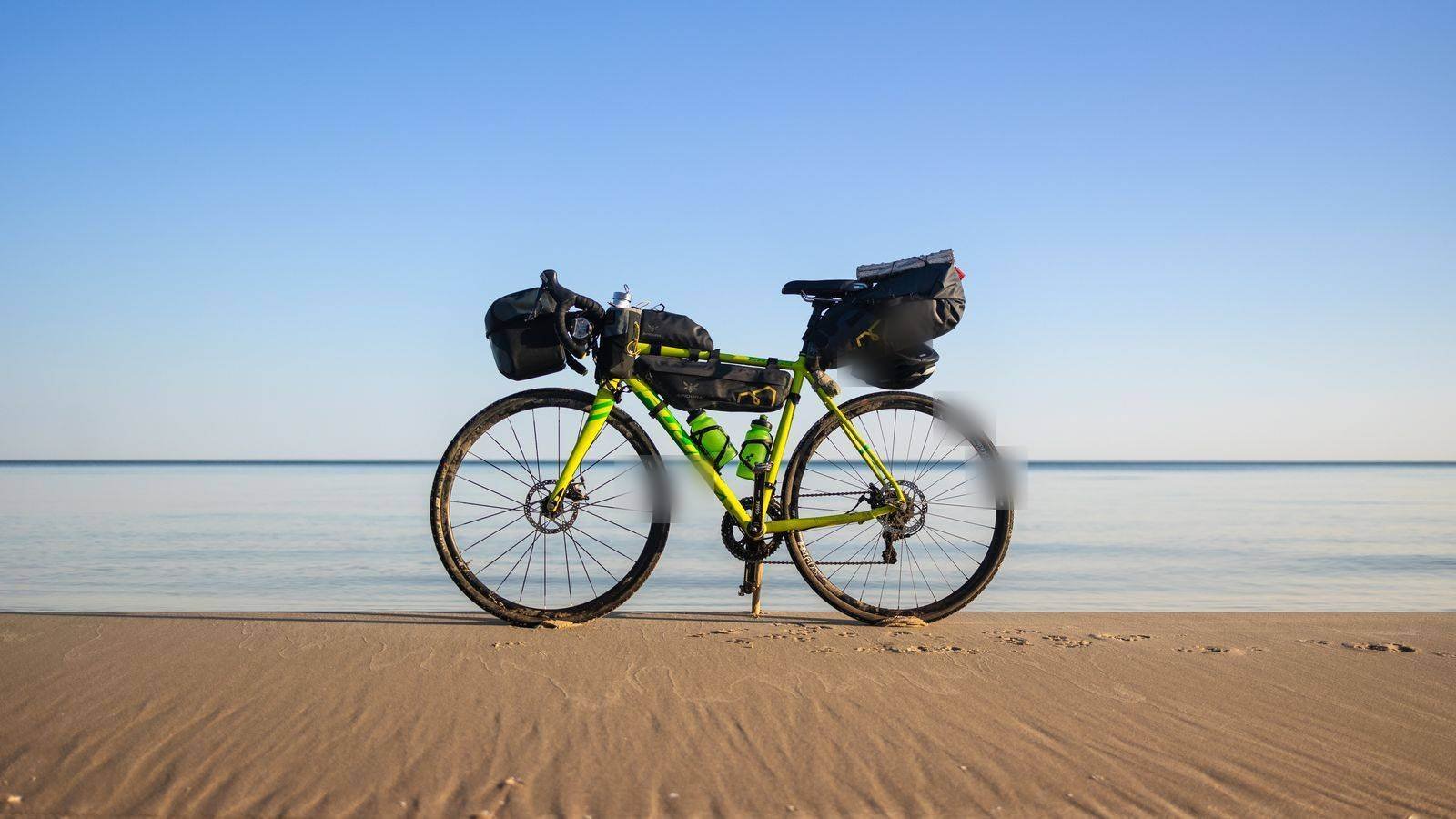
Bikepacking bags let you carry camping gear without racks or panniers: a saddle pack for clothes and a sleeping bag, a frame bag for heavy dense items, a handlebar roll for your tent, and top tube bags for the snacks and phone you want within reach. The best bike packing bags stay quiet over rough gravel, keep water out, and cost far less than a rack setup. We compared the bags riders buy most on Amazon and picked the six best for 2026, from $18.97 to $79.99. Keep the hands that load those bags warm with our best MTB gloves guide, and pack a layer from our best cycling windbreaker roundup.
Quick Picks: Best Bike Packing Bags at a Glance
| Rank | Bag | Best For | Price |
|---|---|---|---|
| 1 | WOTOW Triangle Frame Bag | Best Frame Bag | $19.16 |
| 2 | ROCKBROS 14L Saddle Bag | Best Saddle Pack | $79.99 |
| 3 | Rhinowalk 12L Handlebar Roll | Best Handlebar Roll | $23.99 |
| 4 | ROCKBROS Top Tube Phone Bag 1.7L | Best Top Tube and Phone Bag | $18.97 |
| 5 | Rhinowalk Bolt-On Top Tube Bag | Best Bolt-On | $27.99 |
| 6 | ROCKBROS 1L Saddle Bag with Bottle Pouch | Best Small Seat Bag | $23.99 |
1. WOTOW Triangle Frame Bag – Best Frame Bag
The WOTOW is the frame bag most riders should start with, with about 1,480 ratings averaging 4.6 stars, the best average here. It packs 2L into a 600D Oxford triangle that tucks inside the main frame, keeping heavy items low and centered for stable handling. Dual zippers open a large main pocket from the drive side, and reflective piping all around the bag keeps you visible at night per the listing. Three hook-and-loop straps fit most road, mountain, and commuter frames. At $19.16 it is the cheapest serious upgrade on this list, and it carries tools, a spare tube, and a pump out of your jersey pockets for good.
Pros: Best average rating here (4.6 stars); 600D Oxford with reflective piping; dual-zipper main pocket; fits most frames.
Cons: 2L is compact, not expedition size; hook-and-loop can scuff paint on some frames.
Who it’s for: Riders who want a proven, cheap first frame bag.
2. ROCKBROS 14L Saddle Bag – Best Saddle Pack
The ROCKBROS 14L is the seat pack that replaces a rear rack, with about 402 ratings averaging 4.3 stars. The roll-top opens from 10L up to a full 14L, big enough for a sleeping bag and clothes, and the IPX7-rated waterproof build keeps the load dry in sustained rain per the listing. A hard support board inside stops the sag and tail-wag that plague cheaper seat packs, and reflective details plus a taillight loop cover night safety. It mounts to the saddle rails and seatpost with adjustable straps, no rack eyelets needed. It is the priciest bag here, but it carries what a $150 rack-and-pannier setup would.
Pros: Expands 10L to 14L; IPX7 waterproofing; rigid support board kills sway; taillight loop.
Cons: Highest price here; smaller review base than the budget bags.
Who it’s for: Overnight and multi-day riders who want real capacity without a rack.
3. Rhinowalk 12L Handlebar Roll – Best Handlebar Roll
The Rhinowalk handlebar roll swallows a tent or sleeping pad up front, with about 92 ratings averaging 4.3 stars. The two-part design splits a mounting base from a removable 12L dry bag, so you pull the bag off at camp and leave the harness on the bars per the listing. The fabric is rated to a 4000mm waterproof rating with a roll-top closure, and it doubles as a shoulder bag off the bike with the included strap. Foam spacers keep brake and shift cables clear. For $23.99, this is how most riders should carry their shelter.
Pros: 12L roll-top dry bag; separate harness and bag design; 4000mm waterproof fabric; shoulder strap included.
Cons: Review base of about 92 is still growing; width can crowd narrow drop bars.
Who it’s for: Riders carrying a tent or pad who want a removable dry bag.
4. ROCKBROS Top Tube Phone Bag 1.7L – Best Top Tube and Phone Bag
The ROCKBROS 1.7L top tube bag has the biggest proof in this guide, with about 3,114 ratings averaging 4.4 stars. The EVA hard shell holds its shape when empty, and the TPU touch window fits phones up to 7.2 inches so you can follow GPS and answer calls without stopping per the listing. Below the phone sits 1.7L for tools, snacks, and a battery bank, with a hidden port to route a charging cable up to the phone. Three straps lock it to the top tube and steerer. At $18.97 it is the cheapest bag here and the one every rider uses on every ride, not just on trips.
Pros: Biggest review base here (3,114 ratings); EVA hard shell; TPU window fits 7.2-inch phones; charging port.
Cons: Touchscreen windows reduce swipe sensitivity slightly; too small for plus-size gear.
Who it’s for: Every rider who wants phone access and daily-carry storage.
5. Rhinowalk Bolt-On Top Tube Bag – Best Bolt-On
The Rhinowalk bolt-on is the cleanest top tube mount, and the newest listing here with only about 40 ratings averaging 4.1 stars, so treat it as an early adopter pick and read recent reviews. If your frame has top tube bosses, this bag screws directly to them for a rock-solid, strap-free fit, and a strap kit is included for frames without bosses per the listing. The rigid TPU body measures 22 by 5.5 by 5.8cm at just 152g, sized for a phone, gels, and a multi-tool without knee rub. It is the neatest-looking option here, and direct mounting means nothing slips on rough terrain.
Pros: Direct bolt-on mount, no strap slip; rigid 152g TPU shell; strap kit included for boss-free frames.
Cons: Small review base of about 40 ratings; narrow profile limits capacity.
Who it’s for: Riders with frame bosses who hate straps, and weight counters.
6. ROCKBROS 1L Saddle Bag with Bottle Pouch – Best Small Seat Bag
The ROCKBROS 1L is the daily seat bag for tubes and tools, with about 1,061 ratings averaging 4.4 stars. The 1L main compartment swallows a tube, levers, and a CO2 inflator, while two side mesh pouches and a rear bottle pouch carry an extra water bottle or snacks per the listing. Taillight loops front the rear panel for night visibility, and the strap mount fits standard rails but needs about 9.84 inches of exposed seatpost to avoid tire rub per the listing, so check your frame before ordering. For riders who want more than a micro seat bag but less than a bikepacking pack, this is the sweet spot.
Pros: Bottle pouch plus mesh side pockets; taillight loops; solid 4.4-star base of 1,061 ratings.
Cons: Needs 9.84 inches of exposed seatpost; too small for overnight gear.
Who it’s for: Road and gravel riders carrying spares and an extra bottle.
How We Chose the Best Bike Packing Bags
We started with bikepacking bags sold on Amazon US with a live price and an active offer today, and dropped listings that were unavailable when we checked. We compared capacity, mounting systems, waterproofing claims, materials, weight, and owner ratings. Three of the six picks come from ROCKBROS, the brand with the deepest proven lineup in this category right now, and we flagged that here rather than hiding it. The Rhinowalk bolt-on bag has a small review base of about 40 ratings, flagged in its review. Capacity, waterproofing, and weight figures are the listings’ claims.
FAQ
What bags do I need to start bikepacking?
Start with three: a frame bag for heavy dense items like tools and food, a saddle pack for light bulky gear like clothes and a sleeping bag, and a handlebar roll for your tent. That trio carries 25 to 30 liters, enough for a weekend. Add a top tube bag for the phone and snacks you reach while riding. You can start with just a frame bag and a seat bag and borrow dry bags for the rest.
Are bikepacking bags better than panniers?
For off-road and mixed-terrain riding, yes. Frame-fit bags keep weight centered, add no rack weight, fit any bike including full-suspension mountain bikes, and survive crashes better. Panniers still win for pure road touring: they carry more, pack easier, and come off the bike in seconds. Many riders use bikepacking bags on gravel trips and panniers on pavement tours.
How waterproof are bikepacking bags?
Quality bags like the IPX7-rated ROCKBROS saddle pack are genuinely waterproof in sustained rain. Mid-price bags with coated fabric and roll-top closures handle hours of rain but can seep at seams in a downpour. For sleeping bags and electronics, add a $5 dry bag liner inside any bag; it is cheap insurance no matter what the listing claims.
Will a saddle pack fit my bike?
Most strap-on saddle packs need about 5 inches of clearance between the saddle rails and the tire, plus exposed seatpost for the stabilizer strap. The small ROCKBROS 1L needs about 9.84 inches of exposed post per its listing. Riders on small frames or with dropper posts should check clearance carefully, since a loaded pack that touches the tire will destroy itself.
How much weight can bikepacking bags carry?
Keep a saddle pack under about 10 pounds, a frame bag under 8, and a handlebar roll under 7, lighter on carbon seatposts and forks. Total kit for a weekend typically runs 15 to 25 pounds including food. Heavy items ride low in the frame bag; light bulky items go in the saddle pack and bar roll. Overloading any one mount ruins handling.
Affiliate disclosure: As an Amazon Associate, we earn from qualifying purchases made through links in this article. This doesn’t affect the price you pay, and it helps us keep producing free, independent bike guides.