
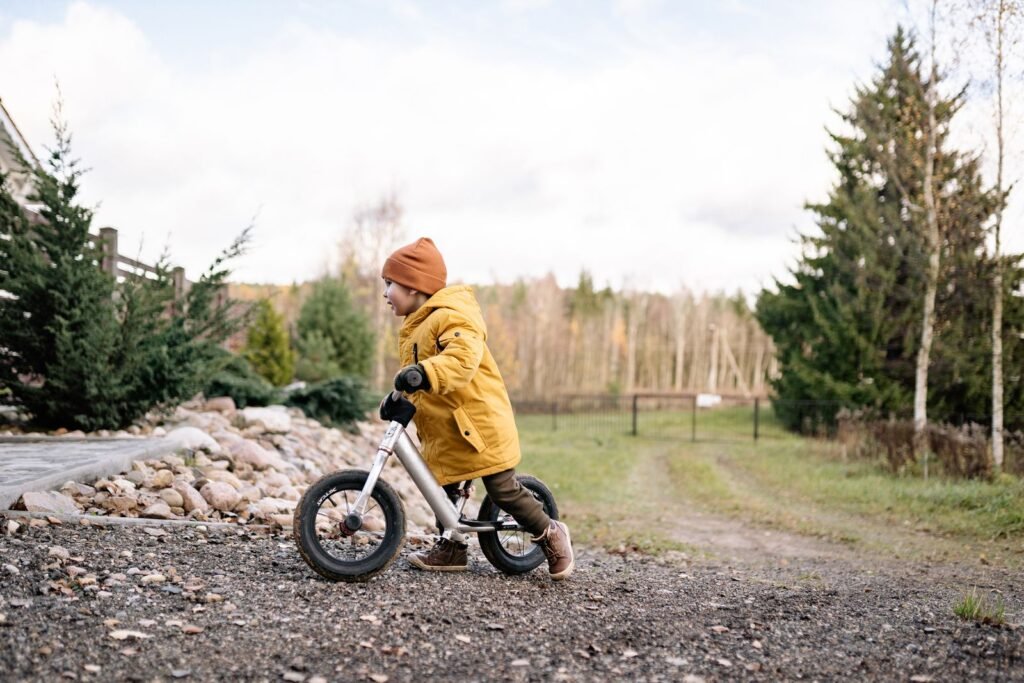
Quick answer: Our top pick in this guide to the best balance bikes is the Strider 12 Sport at about $130 (best overall). The runner-up is the Bixe Pro 16 at about $120. The table below compares all picks by price and who each is best for.
A balance bike is the fastest way to teach a child to ride. Without pedals or training wheels in the way, kids learn the one skill that matters, balance, by walking, gliding, and coasting. Most children who start on a balance bike skip training wheels entirely and pedal on their first or second try on a “real” bike.
The best balance bikes are light enough for a toddler to pick up, low enough for small legs, and adjustable enough to last two or three years. Here are the six we would buy, all stocked at Amazon US at the time of writing.
Disclosure: Push Bicycle is reader-supported. If you buy through links on our site, we may earn an affiliate commission at no extra cost to you. Our picks are independent and based on our own research.
Related guide: how to teach a kid to ride a bike.
Related guide: training wheels vs balance bike.
The best balance bikes at a glance
| Bike | Best for | Approx. price |
|---|---|---|
| Strider 12 Sport | Best overall | ~$130 |
| Bixe Pro 16 | Best for older kids | ~$120 |
| Schwinn Balance Bike | Best big-brand pick | ~$90 |
| Chillafish Fixie | Best design | ~$80 |
| Retrospec Cub | Best value | ~$70 |
| KRIDDO | Best budget | ~$60 |
How we chose the best balance bikes

Balance bikes are judged on weight first, because a child who can lift and swing their bike learns faster. We also weighed minimum seat height, adjustment range, tire type (air versus foam), build quality, and what parents report after a year of hand-me-down use. Every pick is sold on Amazon US; approximate prices reflect typical list prices at the time of writing.
Quick tips before you buy
- Fit the inseam. The seat should sit an inch below your child’s inseam so they can push with flat feet. Measure before ordering.
- Lighter is better. Aim for under 7 pounds for toddlers. Heavy bikes discourage small riders.
- Air or foam tires? Air tires grip and cushion better; foam tires never go flat. For mostly indoor and sidewalk use, foam is fine.
- Skip the brakes at first. Young toddlers stop with their feet. A hand brake matters only for older, faster riders.
- Check the adjustment range. A good balance bike grows two to three years through seat and handlebar height.
1. Strider 12 Sport — Best overall
~$130 | fits ages 1-4 | about 6.7 lb | foam tires | huge accessory ecosystem
The Strider 12 Sport is the bike that invented the category, and it is still the one to beat. It weighs under 7 pounds, fits kids from 18 months to 4 years, and the seat and handlebars adjust without tools. The foam tires never puncture, the frame survives multiple children, and Strider’s racing events and accessories give the bike a whole ecosystem.
It costs more than the clones, and it is worth it.
Pros: lightest full-featured pick; enormous fit range; nearly indestructible; great resale value.
Cons: premium price; foam tires grip less than air on wet surfaces.
2. Bixe Pro 16 — Best for older kids
~$120 | 16-inch wheels | fits ages 5-8 | air tires | hand brake
Most balance bikes age out by 4, but plenty of 5 to 8-year-olds still need to learn balance, including kids with special needs. The Bixe Pro 16 is built for them: 16-inch wheels, a longer frame, air tires, and a hand brake, sized for riders up to about 8 years old.
It is the rare big-kid balance bike, and for late starters it beats training wheels by a mile.
Pros: fits ages 5-8; real air tires; hand brake teaches stopping skills; sturdy build.
Cons: heavier than toddler models; niche sizing means measuring matters.
3. Schwinn Balance Bike — Best big-brand pick
~$90 | 12-inch wheels | fits ages 2-4 | padded seat, adjustable fit
Schwinn’s balance bike brings the classic brand’s fit and finish to the category: a durable steel frame, padded seat, cushioned grips, and a proper adjustment range that grows from age 2 to 4. It looks like a shrunken Schwinn cruiser, which kids and parents both love.
It runs a little heavier than the Strider, but the build quality and brand support justify the trade.
Pros: trusted brand; quality finishes; comfortable contact points; durable steel frame.
Cons: heavier than the Strider; foam tires on some versions.
4. Chillafish Fixie — Best design
~$80 | fixie styling | integrated footrest and footbrake | airless RubberSkin tires
The Fixie is the balance bike kids pick with their eyes: clean fixed-gear styling, a real integrated footrest for gliding, and a footbrake that introduces braking before pedals arrive. The RubberSkin tires look like air tires but never go flat.
It is thoughtfully engineered throughout, and the footrest alone makes gliding practice click faster.
Pros: standout design; integrated footrest and brake; puncture-proof tires; light.
Cons: smaller fit range than the Strider; fewer color options.
5. Retrospec Cub — Best value
~$70 | fits ages 2-3 | about 8 lb | airless tires
The Cub delivers the balance-bike essentials at a friendly price: a low step-through frame, adjustable seat and bars, puncture-proof tires, and build quality that survives hand-me-downs. Retrospec’s kids’ line has a strong track record for the money.
For a first balance bike you plan to pass along, it is the smart buy.
Pros: excellent price; light and low; reliable brand; cute colors.
Cons: narrower fit range than the Strider; basic grips.
6. KRIDDO — Best budget
~$60 | fits ages 2-5 | interactive plate | adjustable seat
The KRIDDO is the budget favorite: under $60, genuinely adjustable from age 2 to 5, and it ships with a customizable nameplate kids adore. The frame is sturdy, assembly takes ten minutes, and the fit range is the widest here after the Strider.
Component refinement trails the pricier bikes, but at this price the KRIDDO gets every important thing right.
Pros: lowest price; wide age range; quick assembly; fun personalization.
Cons: heavier than premium picks; basic tires and grips.
Related guides: toddler bike helmets, 14-inch kids bikes, electric dirt bikes for kids.
Frequently asked questions
What age should a child start a balance bike?
Most kids can start at 18 months to 2 years, as soon as they walk confidently. The Strider 12 Sport fits from 18 months; most others fit from age 2. Earlier is easier, because balance becomes instinct before fear arrives.
Balance bike or training wheels?
Balance bike, every time. Training wheels teach pedaling but delay balance, so the transition to two wheels starts from zero. Balance bike graduates typically pedal within a few tries.
How long will my child use a balance bike?
Usually one to three years, until they are gliding confidently with feet up for long stretches. That is the sign to move to a pedal bike, which you can find in our best kids bikes guide.
Do balance bikes need brakes?
Not for toddlers; their feet are the brakes. A hand brake helps older riders on the bigger 16-inch models, where speeds get real.
Prices and availability change. Check the current listing before you buy. When they are ready to pedal, see our guides to the best kids bikes and the best kids mountain bikes.