
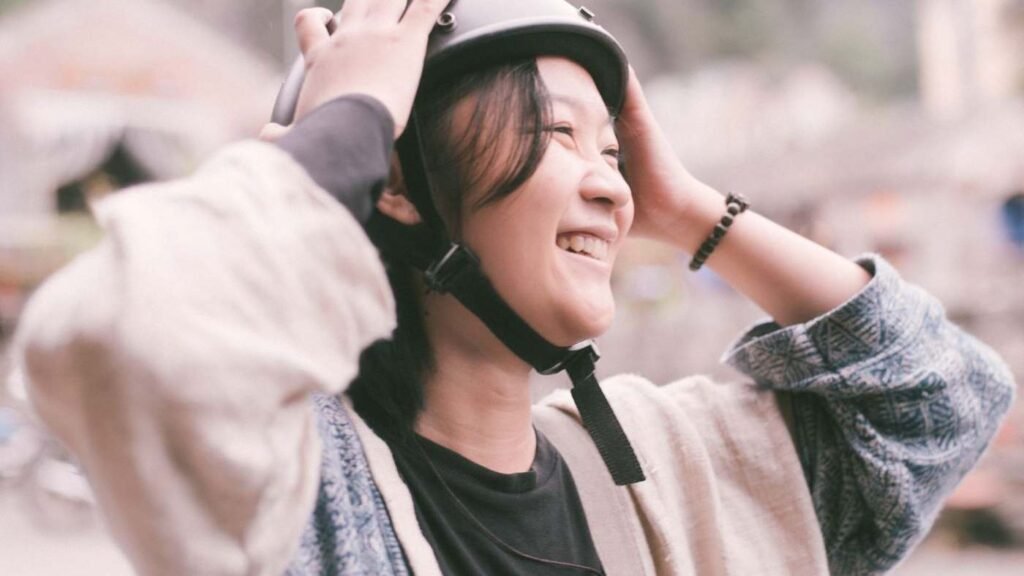
Quick answer: To fit a bike helmet, measure your head just above the eyebrows, pick the size range that includes it, then set the helmet level on your head with the front edge about two fingers above your eyebrows. Adjust the side straps to make a V under each ear and tighten the chin strap until you can fit only one finger under it. The helmet should not rock forward, back or sideways.
A good helmet only protects you when it fits. Most riders wear helmets too far back, with loose straps, and that leaves the forehead exposed. This guide shows how to measure, how to set the straps and when to replace a helmet. When you are ready to shop, see our best bike helmets, the best bike helmets under $50 or the best bike helmets with MIPS.
Step 1: Measure Your Head and Pick a Size
Wrap a soft tape measure around your head about one inch above your eyebrows and ears, where a hat would sit. Write down the number in centimeters. Compare it with the size range for the helmet you want, as sizes differ by brand. Many adult helmets come in small, medium and large, each covering a range of a few centimeters. Many helmets also have an adjustable dial at the back for a final fit.
Step 2: Set the Helmet Level
Put the helmet on and make sure it sits level, not tipped back. The front edge should sit about two finger widths above your eyebrows. Pads that are too thick or thin can change how it sits, so try the different pad sets that come with the helmet.

Step 3: Adjust the Side Straps and Chin Strap
- Side straps: slide the buckles so the straps form a V under each ear.
- Chin strap: tighten until you can fit about one finger between the strap and your chin. Open your mouth wide. You should feel the helmet pull down.
- Rear dial: turn it until the helmet feels snug but not tight.
The Shake Test
Shake your head side to side and nod up and down. The helmet should move with your skin and not slide around. Push the front up and back. It should not shift more than a little. If it does, tighten the dial or adjust the straps again.
Fitting a Kids Helmet
The same rules apply to kids, but small heads often need smaller sizes and thicker or thinner pads. A child should be able to put on the helmet and adjust it alone. See our best kids bike helmets, the toddler bike helmets and the best kids bike helmets under $30. Match the helmet to the kids bike size in our kids bike size chart too.
When to Replace a Helmet
Replace a helmet after any hard impact, even if it looks fine. Foam inside can be crushed in ways you cannot see. Also replace it when the shell cracks or the straps fray. Many makers suggest replacing helmets after a few years, so check the guidance from the maker of your helmet. In the US, bike helmets sold since 1999 must meet the federal CPSC safety standard, so look for the CPSC sticker inside.
FAQ
How tight should a bike helmet be?
Snug enough that it does not shift when you shake your head, with the chin strap tight enough to leave about one finger of room under the chin.
Where should a bike helmet sit on your head?
Level, with the front edge about two finger widths above your eyebrows.
How do I know my bike helmet size?
Measure your head about one inch above your eyebrows in centimeters, then match it to the size range of the helmet you want.
How often should I replace a bike helmet?
After any hard impact, and when the shell or straps are damaged. Many makers also suggest replacing helmets after a few years, so check the maker’s guidance.
Do bike helmets need a CPSC sticker?
In the US, bike helmets sold since 1999 must meet the federal CPSC standard. Look for the CPSC label inside the helmet.