

Quick answer: Our top pick in this guide to the best mountain bikes under $2,000 is the Diamondback Release 29 at about $1,900 (best full suspension). The runner-up is the Polygon Siskiu D7 at about $1,600. The table below compares all picks by price and who each is best for.
Two thousand dollars is the sweet spot for mountain bikes: proper air-sprung forks, 12-speed drivetrains, hydraulic brakes, dropper posts, and even full-suspension frames all become realistic. Spend less and you compromise on the fork; spend more and returns shrink fast for most trail riders.
The best mountain bikes under $2,000 below cover hardtails and full-suspension options, and every one is stocked at Amazon US at the time of writing.
Disclosure: Push Bicycle is reader-supported. If you buy through links on our site, we may earn an affiliate commission at no extra cost to you. Our picks are independent and based on our own research.
Related guide: gravel bike vs mountain bike.
The best mountain bikes under $2,000 at a glance
| Bike | Best for | Approx. price |
|---|---|---|
| Diamondback Release 29 | Best full suspension | ~$1,900 |
| Polygon Siskiu D7 | Best trail bike | ~$1,600 |
| Mongoose Salvo Comp 29 | Best budget full suspension | ~$1,500 |
| KOOTU DECK6.1 Carbon | Best carbon hardtail | ~$1,400 |
| SAVADECK DECK6.0 | Best carbon value | ~$1,300 |
| Diamondback Sync’r | Best hardtail | ~$1,000 |
How we chose the best mountain bikes under $2,000
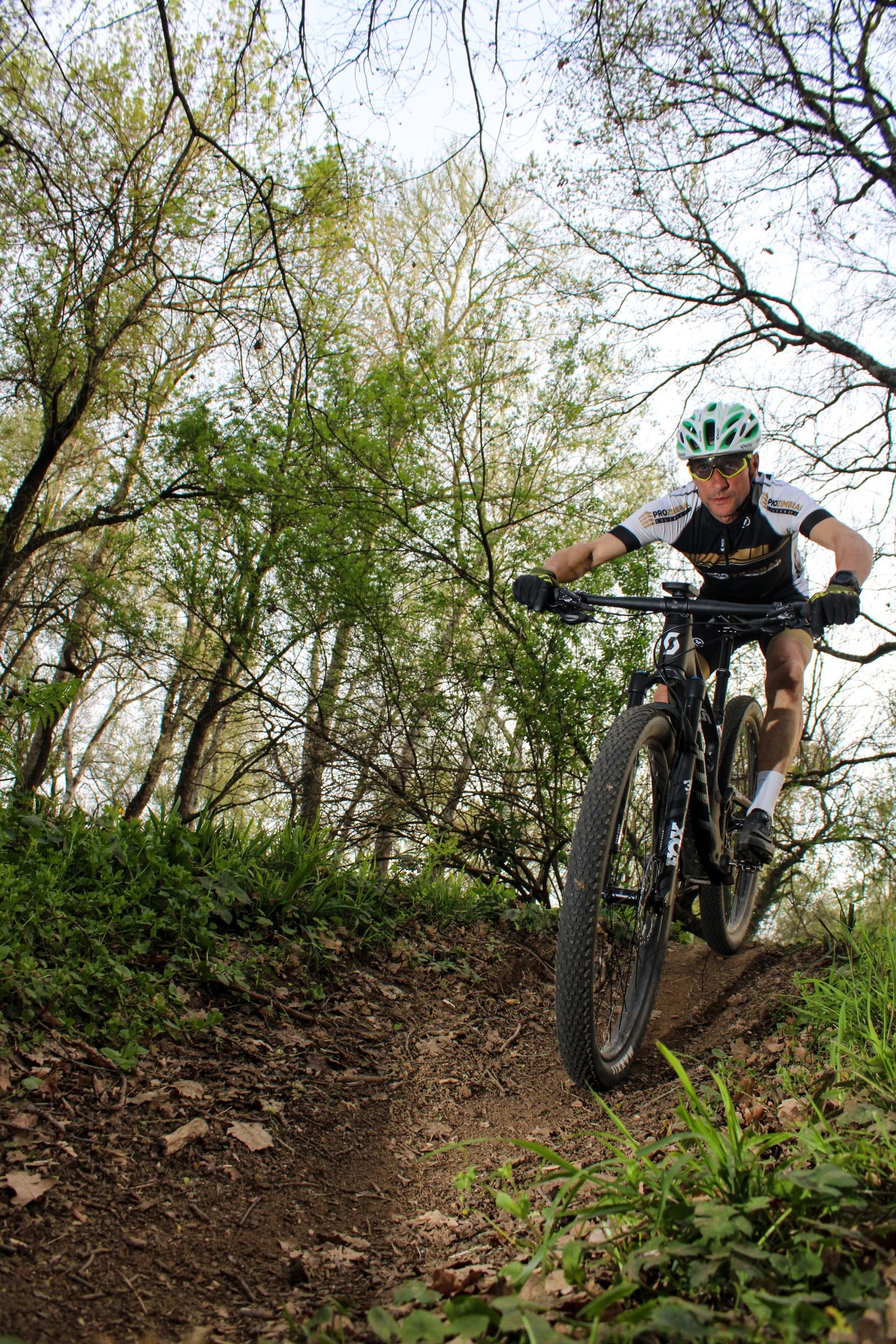
The fork makes or breaks a mountain bike at this price, so we required a proper air-sprung or quality coil fork with real damping, plus hydraulic disc brakes and a modern 1x drivetrain. Beyond that: frame material, geometry suited to trail riding, wheel size options, and deep owner feedback on durability. Approximate prices reflect typical US list prices at the time of writing.
Quick tips before you buy
- Hardtail or full suspension? Hardtails climb better and cost less to maintain; full suspension transforms rough descents. Be honest about your trails.
- The fork is everything. An air fork with rebound adjustment beats any frame upgrade. All picks here clear that bar.
- 1x drivetrain only. A single chainring with a wide-range cassette is the modern standard. Avoid triple cranks at this price.
- Check the dropper. A dropper post changes how you ride descents. Several picks include one; budget for one if not.
- Size by reach, not height alone. Modern trail geometry runs long. Check the reach figure against bikes you have ridden.
1. Diamondback Release 29 — Best full suspension
~$1,900 | 130 mm travel, front and rear | Level Link suspension | 12-speed SRAM | 29-inch wheels
The Release is Diamondback’s acclaimed trail platform: 130 mm of genuinely sorted Level Link suspension that pedals efficiently and eats chunk, a confidence-inspiring slack front end, and a full SRAM 12-speed drivetrain. It rides like bikes costing a thousand more.
For riders tackling real trail centers and technical descents, this is the bike to beat at the price.
Pros: superb suspension kinematics; aggressive trail geometry; strong spec; proven platform.
Cons: top of the budget; heavier than the hardtails; check current listing for the exact build.
2. Polygon Siskiu D7 — Best trail bike
~$1,600 | 120 mm full suspension | Shimano Deore 12-speed | dropper post | 29 or 27.5-inch wheels
Polygon’s Siskiu D7 is the internet’s favorite budget trail bike: a full-suspension frame with modern geometry, a reliable Deore 12-speed drivetrain, and a dropper post included, all from a brand that builds frames for half the industry. Owner reviews are effusive.
It undercuts the Diamondback while giving up little on the trail.
Pros: dropper included; modern trail geometry; excellent factory quality; huge owner community.
Cons: direct-sale support is online only; some sizes sell out fast.
3. Mongoose Salvo Comp 29 — Best budget full suspension
~$1,500 | 120 mm rear travel | RockShox fork | 12-speed SRAM SX Eagle | 29-inch wheels
The Salvo Comp drags proper full-suspension trail riding down to its lowest price yet: a real RockShox fork, SRAM’s wide-range 12-speed Eagle drivetrain, hydraulic brakes, and 120 mm of rear travel through a Horst-link design. Nothing else full-suspension this capable costs less.
It is heavier than the premium picks, but the trail will not notice.
Pros: unbeatable full-sus value; name-brand fork and drivetrain; 29er rollover; capable geometry.
Cons: heaviest pick; entry-level shock; no dropper post.
4. KOOTU DECK6.1 Carbon — Best carbon hardtail
~$1,400 | carbon fiber frame | Shimano Deore M6100 12-speed | 27.5 or 29-inch wheels | hydraulic discs
The DECK6.1 puts a lightweight carbon hardtail frame under a full Shimano Deore M6100 12-speed groupset, the same drivetrain found on $2,500 big-brand bikes. It is light, quick on climbs, and the cleanest way into carbon at this budget.
For XC riding and fast trails where weight matters, it is a revelation for the money.
Pros: genuine carbon frame; latest Deore 12-speed; light; two wheel sizes.
Cons: basic fork compared to the frame; direct-brand assembly required.
5. SAVADECK DECK6.0 — Best carbon value
~$1,300 | carbon frame and fork | Shimano Deore M6000 30-speed | 27.5 or 29-inch wheels | hydraulic discs
The DECK6.0 has been the budget carbon benchmark for years: a stiff carbon frame with a matching carbon fork, 30-speed Deore shifting, and hydraulic brakes at a price that used to buy bare aluminum. Owners report years of reliable trail duty.
The older 3×10 drivetrain dates it slightly, but the fundamentals are outstanding value.
Pros: carbon frame and fork; light for the price; proven reliability; sharp handling.
Cons: 30-speed drivetrain is last-generation; more assembly care needed than big brands.
6. Diamondback Sync’r — Best hardtail
~$1,000 | aluminum trail hardtail | 140 mm air fork | 1x drivetrain | hydraulic discs
The Sync’r is the hardtail that teaches proper trail skills: a long, slack aluminum frame, a 140 mm air-sprung fork that swallows real hits, and a wide-range 1x drivetrain. It is the bike reviewers recommend to friends asking for one bike to do everything.
Spend the savings over the full-suspension picks on pads, a helmet, and a season of lift tickets.
Pros: fantastic fork for the price; playful geometry; bombproof frame; lowest price here.
Cons: no dropper on some builds; heavier than the carbon hardtails.
Related guides: full-suspension mountain bikes under $2,000, electric mountain bikes under $3,000, dropper posts.
Frequently asked questions
What kind of mountain bike can I get for under 2000 dollars?
The best mountain bikes under 2000 dollars include genuine full-suspension trail bikes with 120 to 130 mm of travel, and carbon hardtails with current 12-speed Shimano Deore or SRAM Eagle drivetrains, hydraulic brakes, and air-sprung forks. It is the price where mountain biking gets seriously capable.
Is a carbon mountain bike frame worth it?
At this budget, yes for XC and trail riding: carbon saves a pound or more and damps trail buzz, and direct brands like KOOTU and SAVADECK have reliable track records. If you ride rocky, crash-prone terrain, a quality aluminum frame is the tougher, cheaper-to-replace choice.
Hardtail or full suspension for a first trail bike?
A hardtail if your trails are smooth to moderate, your budget is tight, or you want low maintenance; full suspension if your local trails are rocky and rooty or descents are the point. Either way, prioritize the fork and brakes over the frame material.
27.5 or 29-inch wheels?
29ers roll over obstacles more easily and carry speed, suiting most riders and trails. 27.5-inch wheels feel more agile and suit shorter riders and tight, jumpy trails. Most picks here offer both, and medium and larger frames usually default to 29.
Prices and availability change. Check the current listing before you buy. Shopping different budgets? See our guides to the best mountain bikes under $1,000, the best mountain bikes under $500, the best hardtail mountain bikes, and the best mountain bike tires.